Nine #DirectedByWomen Films that Inspire Us to Follow Our Dreams
Written by Mimi Anagli, Julia Stroman, Chrystel Lopez, Iliana Cosme-Brooks, Alexandra Hidalgo, and Allison Simpson
Developmentally Edited by Alexandra Hidalgo
Copy Edited and Posted by Iliana Cosme-Brooks
If an organization is lucky, it fosters bonds with sister organizations along the way. One of our most rewarding and enduring relationships is with #DirectedByWomen. This global movement, catalyzed by our dear friend Barbara Ann O’Leary, is hosting its seventh annual celebration of films featuring women in the director chair this month. As you spend the month of September lost in the complex and gratifying worlds that women have brought to life on the screen, we invite you to enjoy these nine coming-of-age stories that remind us that we can take the hurdles life throws our way and use them to sharpen our tenacity and craft a stronger identity for ourselves. If we take life’s countless challenges as these films’ protagonists do, we may, like them, bring our dreams to life.
So, grab something warm and cozy and get ready to be inspired by these unstoppable women directors and their characters as they pursue their unflinching vision and invite you to do the same with yours. After you watch, let us know what you think on Twitter and Instagram and also tell us which #DirectedByWomen films make you want to pursue your passions.
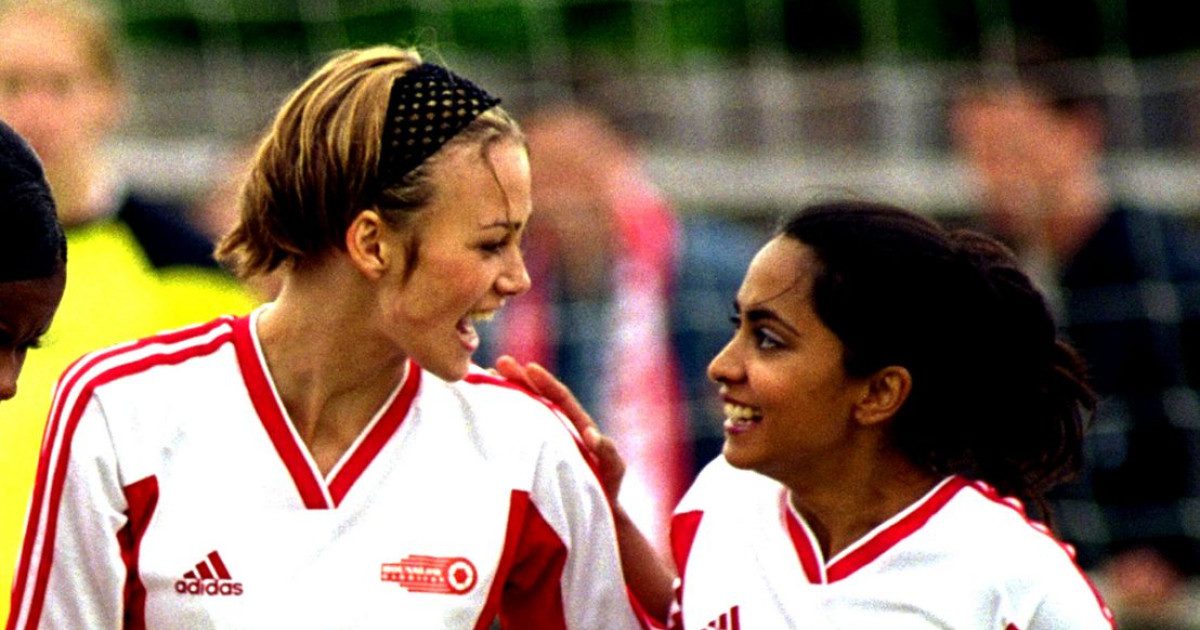
Bend It Like Beckham (2002), dir. Gurinder Chada
By Alexandra Hidalgo
Gurinder Chada’s coming-of-age classic Bend It Like Beckham is so galvanic that even someone who, like me, would much rather go to the dentist than kick a ball around, can relate to teenagers Jess (Parminder Nagra) and Jules (Keira Knightley) as they bring their boundless talent and spark to their women’s league soccer team. Although they come from different cultures, both Jess and Jules struggle with mothers who desperately want their daughters to focus on dating and domesticity, seeing their passion for soccer as a deviation from how “normal” girls should behave. While Jess has to hide her playing from her Indian parents who don’t approve of their daughter wearing shorts as she runs around a field, Jules struggles to make her English mother understand why she’d rather buy a sports bra instead of the one with a pump that her mother promises will help her small breasts look more enticing. And yet, as the film demonstrates, women today don’t need to choose between professionally fulfilling lives and having a family. It takes some very complicated maneuvering and it rarely comes out as planned, but we can have satisfying love and family lives while pursuing careers we feel passionate about. In the film’s most exhilarating sequence, Jess leaves her sister Pinky’s wedding celebration to play in the last half hour of her team’s championship final. She changes out of her pink sari in the car and enters the field. As we hear the upbeat Indian music that the band at Pinky’s wedding is playing, we cut back and forth between Jess and Jules playing and Pinky and her jubilant wedding guests dancing. The sequence reaches its apex when the soundtrack switches to Puccini’s “Nessun Dorma” aria as Jess, having been fouled, has the chance to score with a free kick. When she’s about to kick the ball, the players before her transform into her mother, sister, and other wedding guests. The women in saris gesticulate at Jess, a reminder that she abandoned them (briefly) during this vital day and that no matter where she is, they are always with her. As Jess kicks the ball, we know that whether or not she scores, she has begun to figure out how to play the infinitely more difficult yet satisfying game of balancing the multitudinous commitments in her life without forgetting who she is and who she wants to become. You can find out if Jess and Jules win the game when you watch Beckham on Disney Plus.
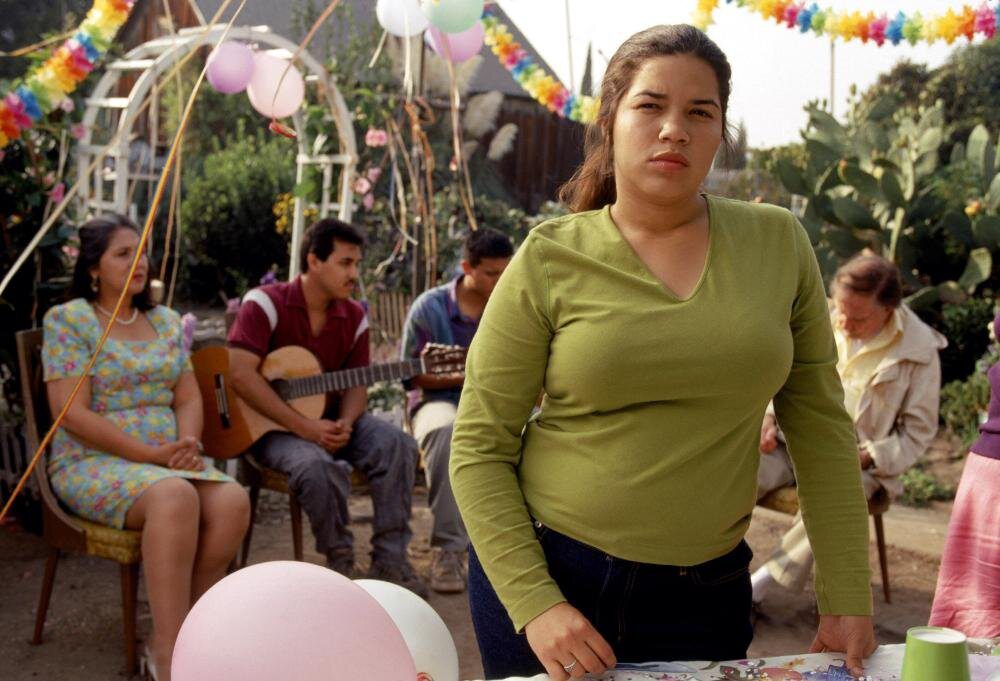
Real Women Have Curves (2002) dir. Patricia Cardoso
By Chrystel Lopez
Ana Garcia (America Ferrera), the charismatic protagonist of Real Women Have Curves has to ride two busses past rusty chicken-wire fences and run down mercados and massive murals of Madre María just to make it to her last day of high school, despite her mother’s demands that she stay home and work in the family sewing factory. This four-minute opening says more than any plot summary could. Ana is struggling with the desire to go to college and the pressure to provide for her working-class Mexican-American family. Coupled with a complicated relationship with her body-shaming mother Carmen (Lupe Ontiveros) and a blossoming relationship with a white classmate drowning in privilege, Ana’s story shows the complexities and inner turmoil of being poor, Latina, and young. Though the majority of her family wants to see her go off to college, her mother, traumatized by her own hurtful upbringing, transfers much of the pain she experienced to Ana by obsessing over her daughter’s virginity and weight. Although she is trying to keep her close and protect her through her actions, she ends up alienating her and making an already difficult adolescence even more arduous for Ana. As Ana works in the family factory ironing elegant dresses, Carmen reminds her daughter that she can’t fit into them because she’s not thin enough in her mother’s mind. Not only does Ana have to fight for her dreams, but she has to fight for self-love. While she tries hard to satisfy her mother’s boundless demands, Ana ultimately has to walk away from the path set before her and build a new one. As she grows, she realizes how beautiful she is in body and mind (and I mean, come on, she is played by America Ferrera. Of course she is beautiful). Real Women Have Curves is not just a story. It is a truth for brown women—this is our world and we aren’t afraid to take up space in it. You can rent Real Women Have Curves on Youtube or stream on HBO Max.
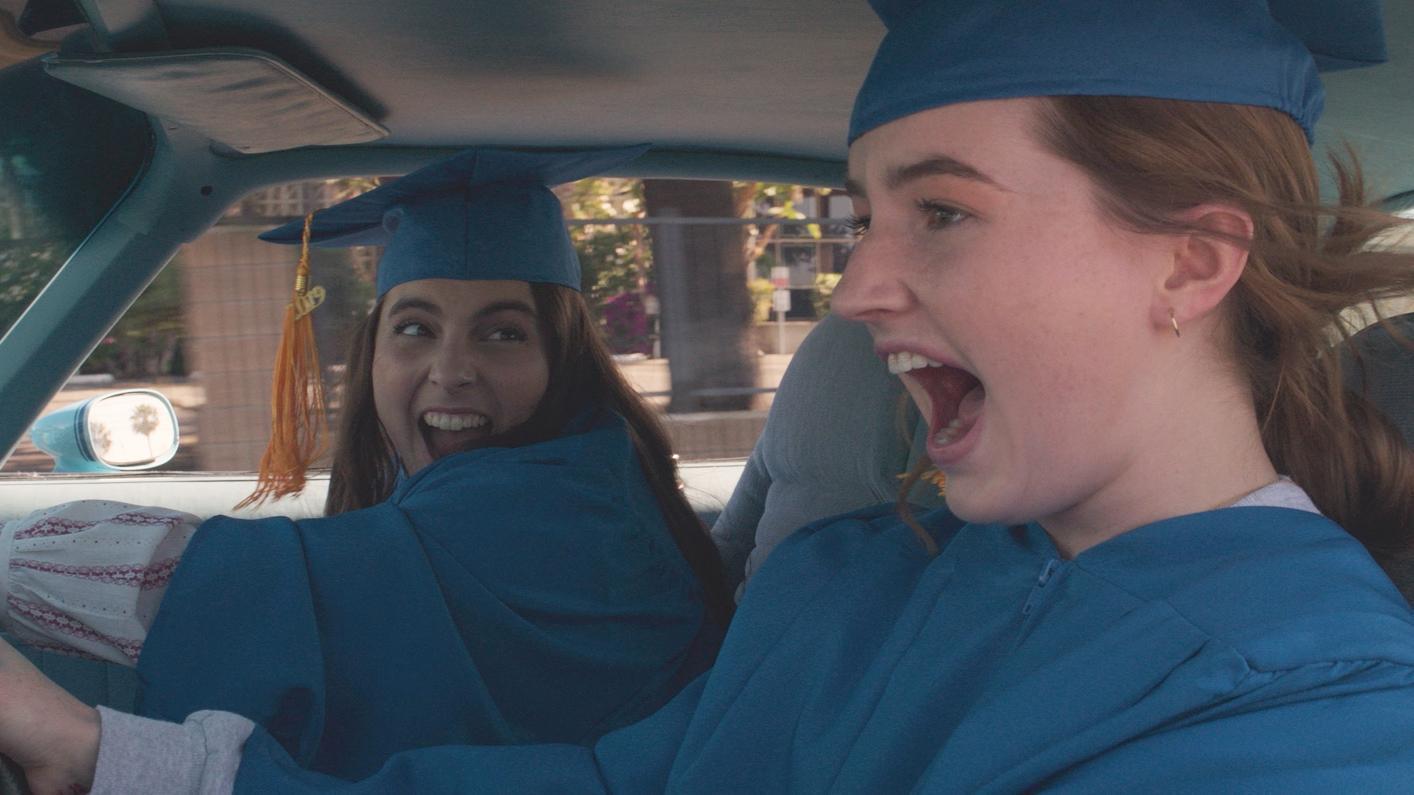
Booksmart (2019), dir. Olivia Wilde
By Mimi Anagli
With the tensions and pressure put on teenagers to succeed, high school often becomes a place of stress, discovery, and personal growth. It also happens to be the setting for most coming of age films. Olivia Wilde’s directorial debut
With the tensions and pressure put on teenagers to succeed, high school often becomes a place of stress, discovery, and personal growth. It also happens to be the setting for most coming of age films. Olivia Wilde’s directorial debut Booksmart capitalizes on this prime setting with a story whose cringeworthy accuracy transports anyone who, like myself, was a high school overachiever back to a place of countless all-nighters, meltdowns, and regrets while reminding us to live a little. The story may also transport you back to the exact moment where you realized that you’ve spent so much time planning for the future that you forgot to live in the present. For protagonist Molly (Beanie Feldstein), that moment came a day before graduation, resulting in the only acceptable solution her highly analytical brain could devise—fitting four years of partying and rule breaking into one night. Molly and her best friend Amy (Kaitlyn Dever) embark on a wild night of boats, drugs, and the looming awareness that life will never be the same. Their plan to explore uncharted territories brings out parts of them that have never seen the light of day and ultimately forces them to face what lies ahead for their friendship and future. The act of “coming of age” can be an incredibly eye-opening and freeing experience, but, as Booksmart shows, it can also involve the incredibly tough process of grieving a past self and embracing the unknowns that the future carries. Wilde captures this complex stage of life with a script and soundtrack that nails the naivete, heartbreak, and courage that comes with being a teen. Wilde’s skilled direction paired with Feldstein and Dever’s onscreen chemistry makes for a very lighthearted yet raw depiction of an awkward and uncomfortable transition that many of us can relate to. High school is a launch pad between adolescence and adulthood, which can produce a mindset where teens are hyper aware of their future and the impact their decisions will make on it. While it’s important to stay focused, Booksmart reminds its audience that it’s the unplanned and spontaneous moments of life that will matter in the end. You can stream Booksmart on Hulu.
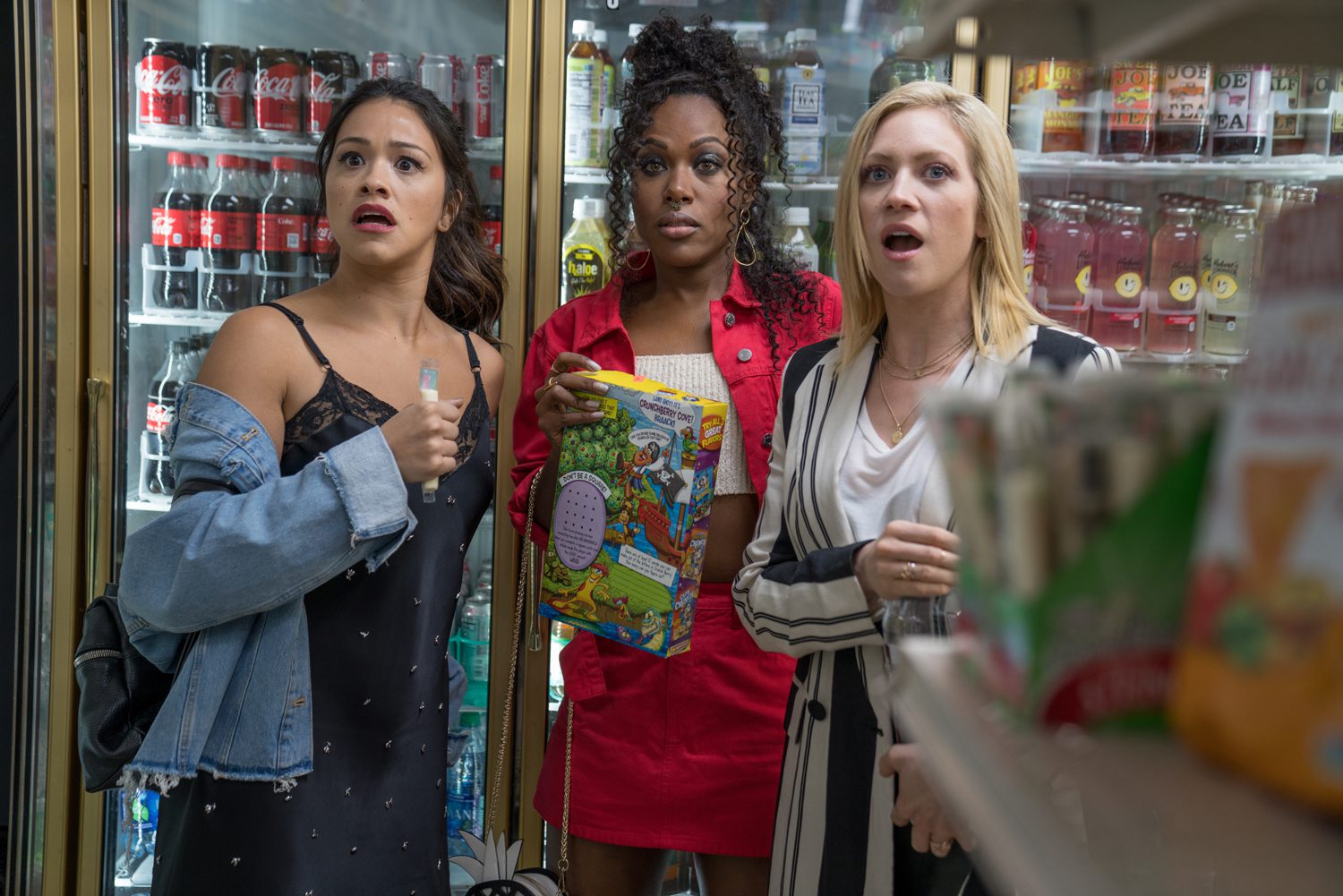
Someone Great (2019), dir. Jennifer Kaytin Robinson
By Julia Stroman
Someone Great follows Jenny Young (Gina Rodriguez), a music journalist who has just ended her relationship of 7 years and is getting ready to move to San Francisco for the next step in her career as a music journalist. The stylistic elements of the film are engaging, particularly the vibrant color palette, the filters used to differentiate between past and present, and the unassuming but elegant costume design. The story takes place over 24-hours, beginning with Jenny waking up on her floor, fresh from her breakup that occured the night before. About half the film consists of flashback sequences of the three friends in college, evoking nostalgia and providing more depth for our characters, as we can see how they have evolved to the present day. Jenny seeks comfort in her best friends, Blaire (Brittany Snow) and Erin (DeWanda Wise), and the three girls prepare to give Jenny the New York send-off she deserves. While the plot is essentially that of a romantic-comedy/breakup film, the film is not really about mourning Jenny’s loss as much as it is Jenny learning to love herself and letting go of a relationship that was holding her back. The film also details female friendship based on mutual respect and unconditional love. There are beautiful details staggered throughout the film—Erin and Jenny dancing to “Truth Hurts” (the ultimate breakup anthem) and the flashback to the three friends at a college party—that make their friendship feel raw and genuine. The focus on female characters in this film is also made apparent with Blaire and Erin’s side stories. We see Blaire juggle feelings for two men; one she has been in a bland relationship with, and another that she has intense feelings for. Meanwhile, Erin is struggling to commit to the woman she has been seeing, despite her obvious feelings for her. The three storylines wrap up beautifully, giving each character different levels of depth and personality. By the end of the film, all three friends see their lives headed in unexpected directions, and they are content in the knowledge that they will be able to deal with anything life may throw their way, because they have each other. Stream Someone Great on Netflix.
Lady Bird (2017), dir. Greta Girwig
By Allison Simpson
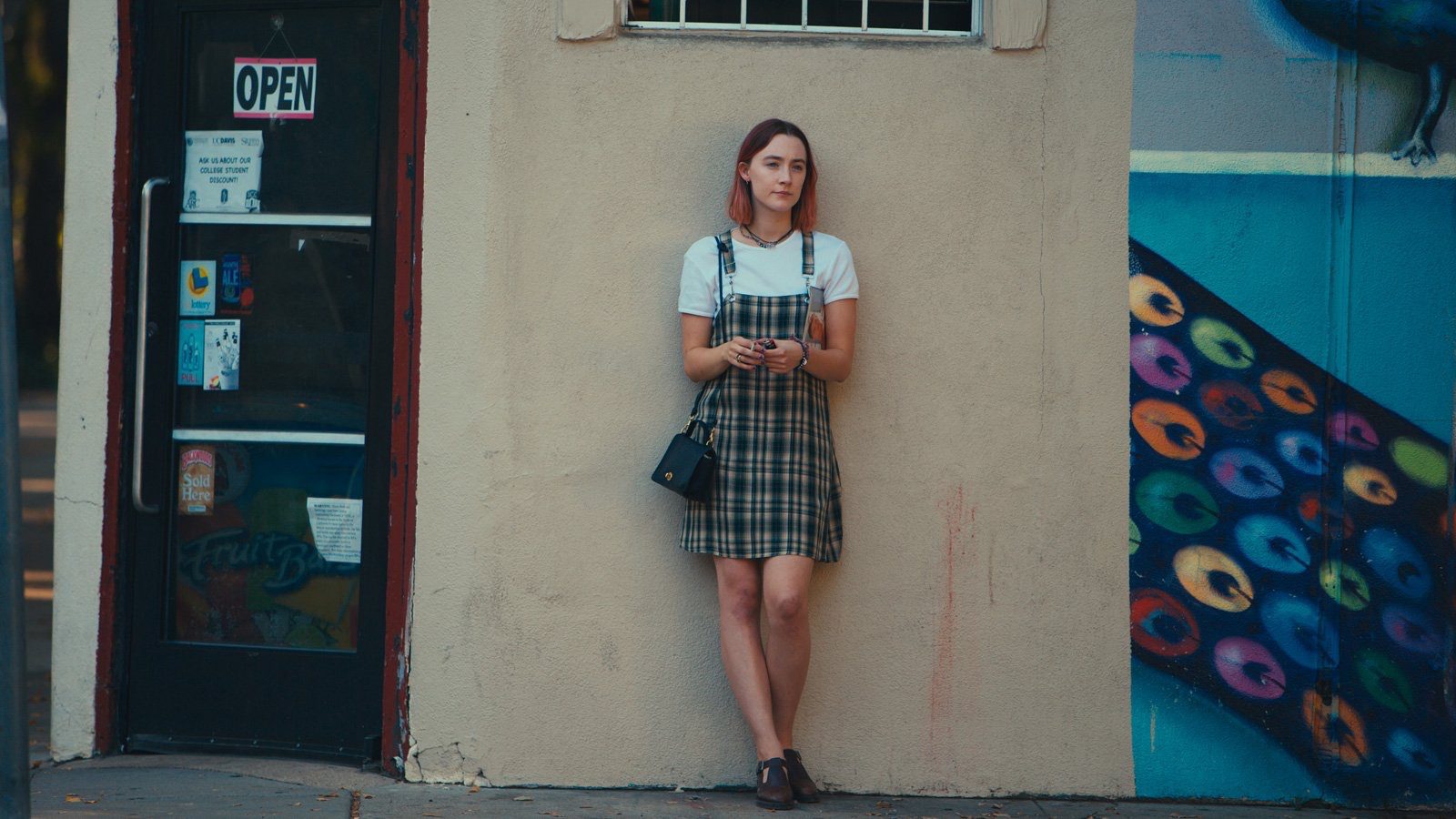
This inspiring coming-of-age story follows Christine “Lady Bird” McPherson (Saoirse Ronan) as she navigates her senior year in Sacramento, California. Throughout the film, Lady Bird longs for adventure, opportunity, and a change of pace from her Catholic high school, which she believes will come from going to college far from home. Her dream lives on despite her mother Marion’s (Laurie Metcalf) belief she should attend college closer to home, since their family cannot afford to send Lady Bird to the school of her choice. Their disagreement around Lady Bird’s future college plan is a constant conflict that reveals their different personalities, testing their love throughout the film. To escape the confusion of her future, Lady Bird joins the theatre program with her best friend Julie (Beanie Feldstein), but while in the program she makes questionable choices that pull them away from each other. Through the distancing from her mother and her now fractured friendship with Julie, Lady Bird realizes that she is at a point in life where she is growing up and blossoming into who she is supposed to be; however, in order to do that in ways that will help her achieve her dreams, she will need both Marion and Julie by her side. Through its dim colors that seemingly become brighter as the story progresses, this beautifully crafted film highlights the struggle of growing up and searching for identity that everyone endures at some point during their youth. While what we might be going through is confusing and tough, with the help of friendship and our parental relationships we eventually find ourselves navigating the world with confidence. You can rent Lady Bird on Amazon and Youtube, or stream on Netflix.
The Secret Life of Bees (2008), dir. Gina Prince-Bythewood
By Iliana Cosme-Brooks
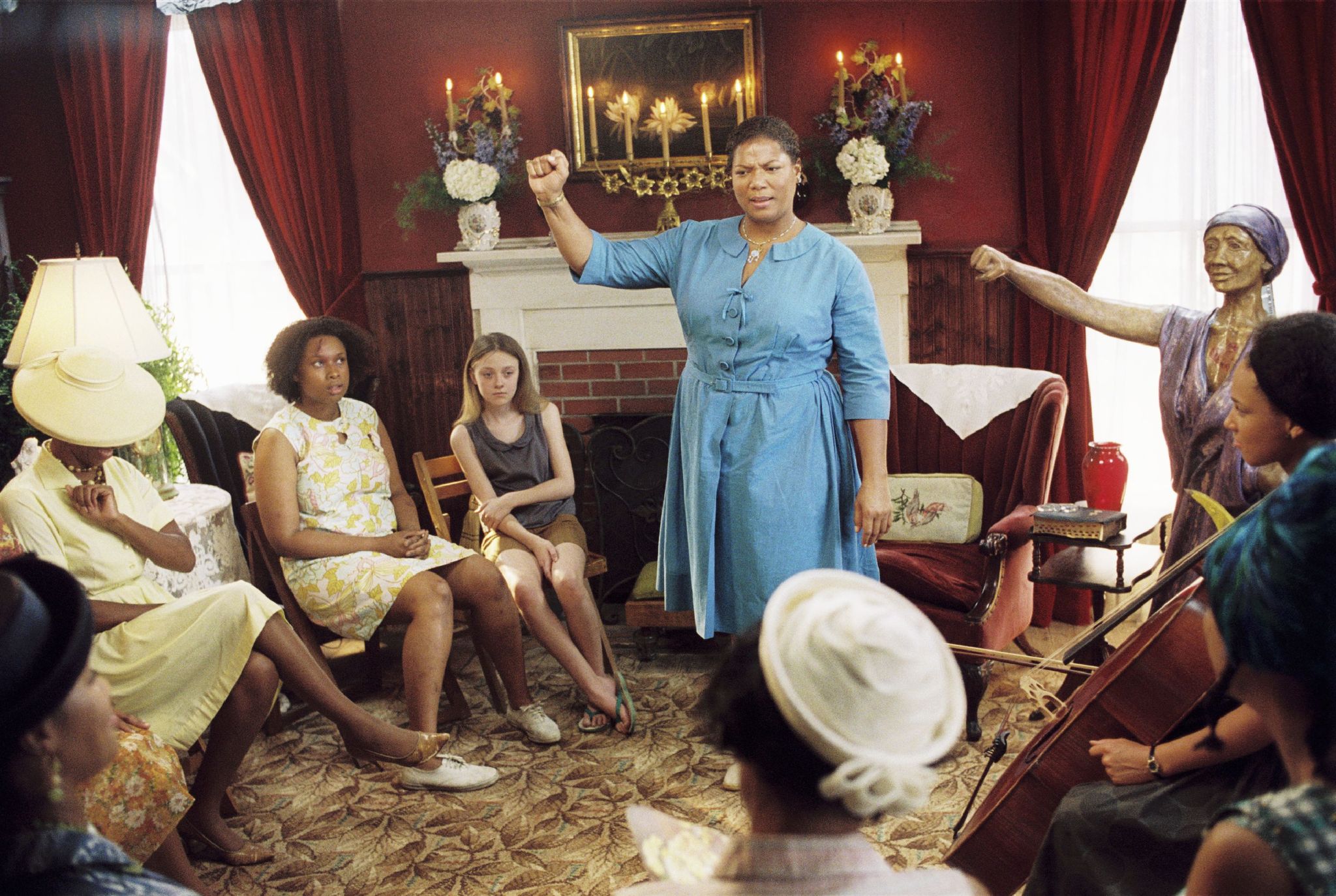
The Secret Life of Bees, adapted from Sue Monk Kidd’s book, tells the story of Lily Owens (Dakota Fanning), a 14-year-old white girl who, when she was only four years old, accidentally shot her mother. We follow her and her Black housekeeper Rosaleen (Jennifer Hudson) during the summer of 1964 as they run away from Lily’s abusive father to move in with August Boatwright (Queen Latifah), a beekeeper, and her two sisters in their Pepto-Bismol-colored house in the fictional town of Tiburon, South Carolina. Initially, Lily views running away as a means of escaping her father and an attempt to learn more about her mother, who only lives in her rose-colored daydreams. But, as the weeks pass, Lily comes into her own as a young woman. From becoming a beekeeper’s apprentice, to leaning into her writing aspirations, to learning about her mother’s struggles with depression, Lily begins to find her place in the world, all while she and her newfound family live through the summer of the Civil Rights Act in what is now a multiracial household. Rosaleen, on her part, sheds her housekeeper role to embrace a natural, emboldened way of living alongside the Boatwright sisters. We are able to watch these characters learn and grow through little things, like the gradual healing of Rosaleen’s injury from being beaten by some white men at the beginning of the film, her choosing to wear her natural hair like the Boatwrights, and Lily’s fluctuating relationship to her mother represented through her collecting and wearing her mother’s accessories throughout the film. Secret Life shows us that our dreams change as we do and that we, in turn, change in response to the world around us. In order to become who we’re meant to be in a tumultuous world, we not only need to be tough, but we need support systems of love—and if we’re not surrounded by such systems, we must leave our comfort zone and find them. You can rent Secret Life on Apple TV, Amazon Prime Video, or YouTube.
One Sings The Other Doesn’t (1977), dir Agnès Varda
By Mimi Anagli
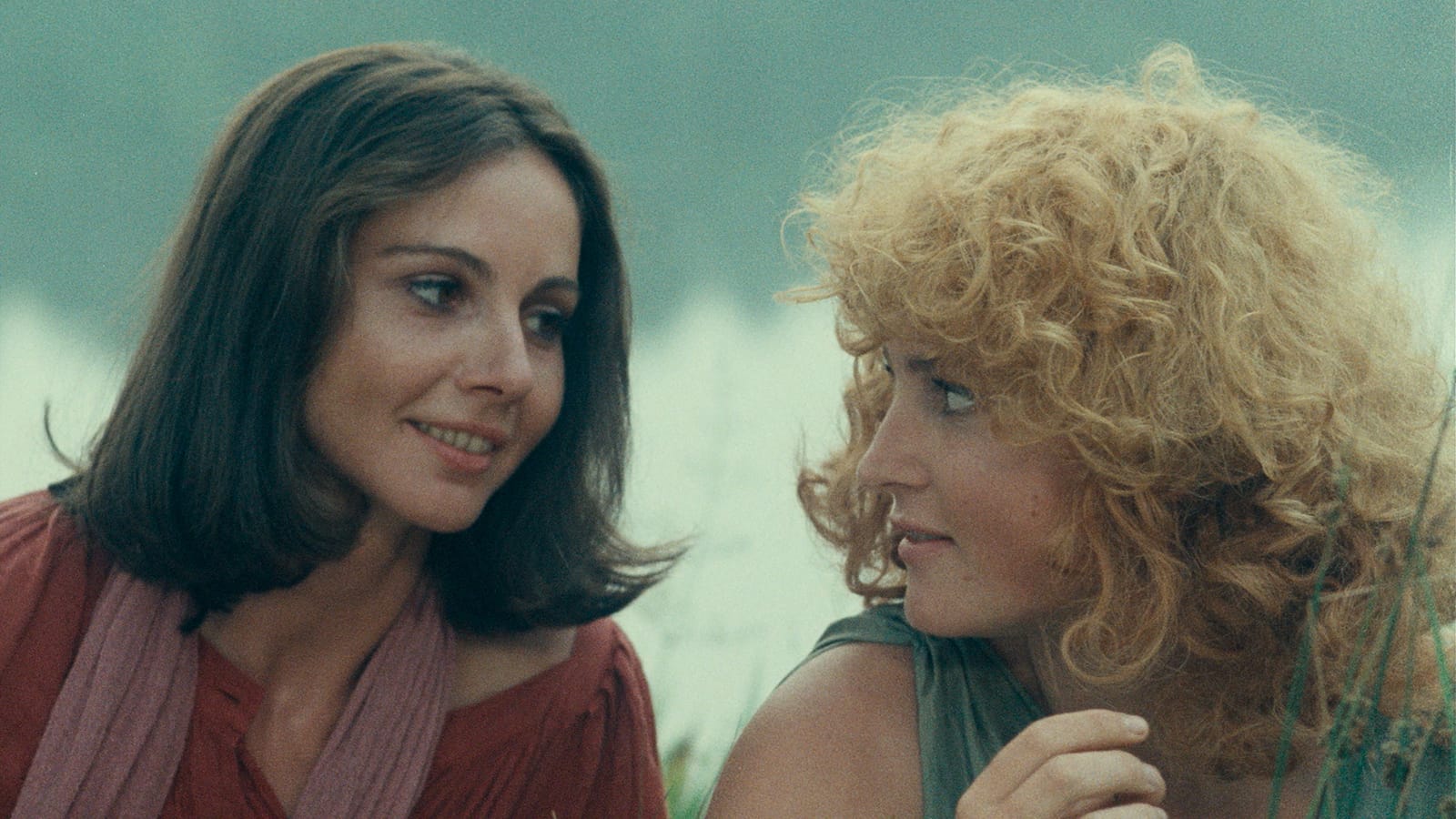
Like much of Agnès Varda’s filmography, One Sings The Other Doesn’t is a timeless work of art that beautifully illustrates womanhood. In this case, Varda expands on womanhood, exploring female friendship and body autonomy during France’s women’s liberation movement. Covering a 14-year span, the film follows the friendship between a fiery teen named Pauline (Valérie Mairesse) and a young and exhausted mother named Suzanne (Thérèse Liotard). Their friendship blossoms when Pauline, who later adopts the nickname Pomme, helps Suzanne get an illegal abortion. As time passes, these women grow into their femininity and navigate what it means to be a liberated woman in France. Pauline goes from being a stubborn yet bold teen to an adventurous traveller who expresses her feminist sentiments through singing and performing. Suzanne continues to live a more reserved life, opening a family-planning clinic and passing her feminist fervor on to her daughter Marie. While their paths to self-discovery and autonomy couldn’t be more different, Pauline and Suzanne share a deep connection, knowing that their understanding and appreciation for womanhood would not be the same without each other. One Sings The Other Doesn’t is a true homage to the female experience. Varda’s photograph-like camera composition and awe-inspiring song lyrics work to create a dazzling ode to female liberation in the 60s and 70s. While the film is a blast to the past, its message is more relevant than ever. With Texas’ recent passing of the most radically restrictive abortion law in the US, we are experiencing a surrealist, almost comican regression in the fight for bodily autonomy. As the film, which was made over 40 years ago, shows, feminist movements—old and new—have tirelessly tried to convey the simple fact that our bodies are not objects to be governed on. Varda paints this issue in a very unique way, showing the audience the beauty of motherhood while not letting us forget that its beauty should be a choice. You can watch One Sings The Other Doesn’t on Amazon Prime.
Saving Face (2004), dir. Alice Wu
By Allison Simpson
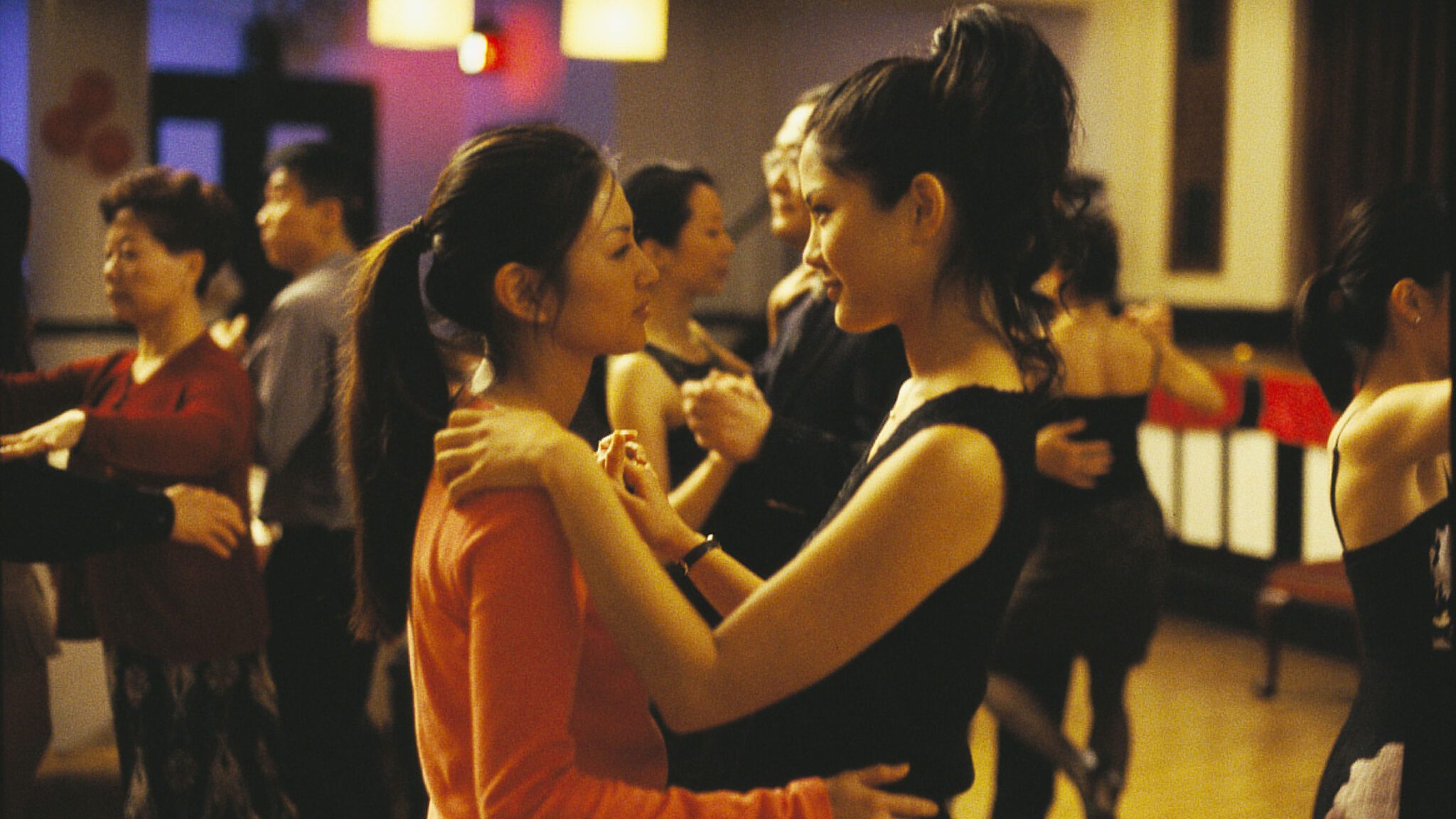
While Saving Face features many romantic comedy tropes, Wu’s film blends love and laughter while exploring the rarely-seen-on-screen challenges Asian American and LGBTQ+ communities face. Chinese-American doctor Wil (Michelle Krusiec) and her mother Hwei-Lan Gao (Joan Chen) feel disconnected from their cultural community because of the nontraditional secrets they are holding. Through the story’s traditional Chinatown setting, viewers become exposed to what it’s like living in this type of community with these unspeakable secrets. When Hwei-Lan’s secret that she is pregnant at 48 with no husband gets out, her father (Jin Wang) banishes her from the family until she can find a husband to take responsibility for the child. Wil, on the other hand, is hiding her relationship with Vivian (Lynn Chen), knowing that her family and her community will not approve of their lesbian relationship. As the story unfolds, mother and daughter work together to tackle the complicated task of facing their challenges in ways that will make them happy, all while pleasing their traditionalist community. Eventually, they decide to put their own happiness first by standing up for themselves, even if it means upsetting those around them. This touching film reminds viewers that we need to make ourselves happy and love those close to us for who they truly are. Even though it’s sometimes hard to stand up for ourselves, trying to conform to society’s unattainable standards comes at a much steeper price. You can rent Saving Face on Amazon, Youtube, Vudu, and Apple TV.

Whale Rider (2002), dir. Niki Caro
By Alexandra Hidalgo
Whale Rider opens with a man consoling his wife through the clearly arduous labor of birthing twins. Soon, he is the one who needs consoling as his wife and son die, leaving him to bring up a baby girl, Pai (Keisha Castle-Hughes). After her brokenhearted father flees home, Pai is raised by her grandparents in her New Zealand Māori village. Her grandfather Koro (Rawiri Paratene) is her tribe’s current chief and, believing that Pai’s dead brother was meant to be the new leader of their people, is conflicted between his love of his granddaughter and his sense that she is somehow to blame for the tragedy that accompanied her birth. Castle-Hughes, who was 13 when she made the film, became one of the youngest Best Actress Academy Award nominees for her performance as a pensive, resolute girl who is unstoppable in her mission to let Koro and the rest of the village know that even though girls are not allowed to become chiefs, she is destined to be their next leader. Shot featuring a gifted Māori cast, the film is not only a love letter to girls standing up to the patriarchy in their families and culture, but also to Māori storytelling and traditions. Some of the film’s most heartfelt sequences involve a group of young boys learning to sing traditional songs and engaging in ceremonial battle, while Pai, ostracized by her gender, secretly soaks it all in from the sidelines. Growing up is hard enough, but doing so in a world that has for centuries tried to eradicate your cultural identity can seem unsurmountable. As Whale Rider shows, however, with tireless determination and a clear sense of what we want to accomplish in the world, we can begin to take down the walls that divide us from ourselves and from each other. You can rent Whale Rider on Apple TV and on YouTube.
What #DirectedByWomen films are you watching this month? Be sure to tweet us @agnesfilms! You can learn more about Mimi, Julia, Chrystel, Iliana, Alexandra, and Allison by visiting their profiles.