Interview with Ragini Bhasin, director of Ghazaal
Interview by Jennifer Dean
Copy Edited and Posted by Iliana Cosme-Brooks
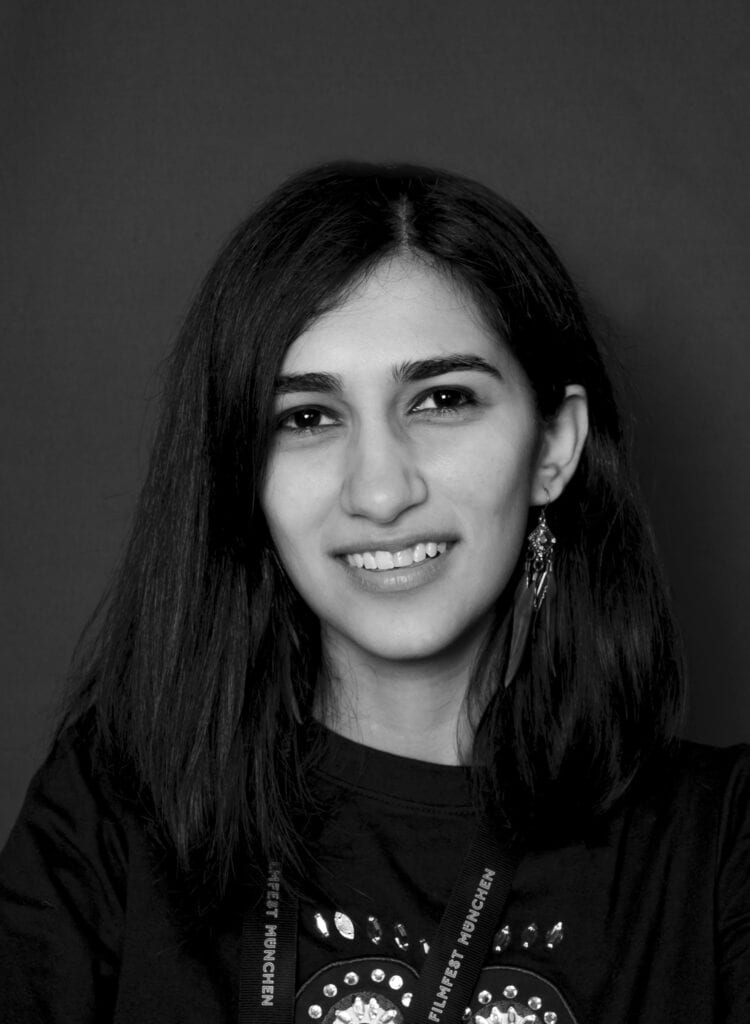
Your award-winning short film Ghazaal tells the story of a young teenager in a refugee camp dealing with the existence of her monthly period. In the film there doesn’t appear to be any older women for Ghazaal to turn to for advice in dealing with what is a very common biological reality for women around the world, thus making a routine reality poignantly specific for Ghazaal. What inspired you to tell a story of the often-taboo topic of menstruation specifically from the point of view of this young refugee?
Once I completed the first draft of Ghazaal, I asked myself the quintessential question that every filmmaker asks, usually a little earlier in the process, “Why am I telling this story?”
I knew that I have always wanted to tell a story that is centered around a girl experiencing her periods, but I wasn’t sure why I was telling it from the point of view of a young refugee.
For years I was staggered by the multitudinousness of the refugee crisis and had read umpteenth number of articles and seen a few documentaries, most of which seemed factual, objective, and distant. I’d wonder how people conducted themselves daily, how children made friends, and how girls managed during their menstruation cycle. Somewhere in this chain of thought, the story incubated. For research purposes, I volunteered at a refugee camp in Greece and interviewed a few refugees to get a better sense of what life is like for those who inhabit the camp. I still don’t know if I was the right person to tell this story, or if I even possess the right to fictionalize a character whose life is so different from mine, but I combined my passion with my curiosity to carve a film that hopefully feels intimate.
I understand you volunteered at a refugee camp in Greece before shooting the film. Can you tell us about that experience and how working there informed the film?
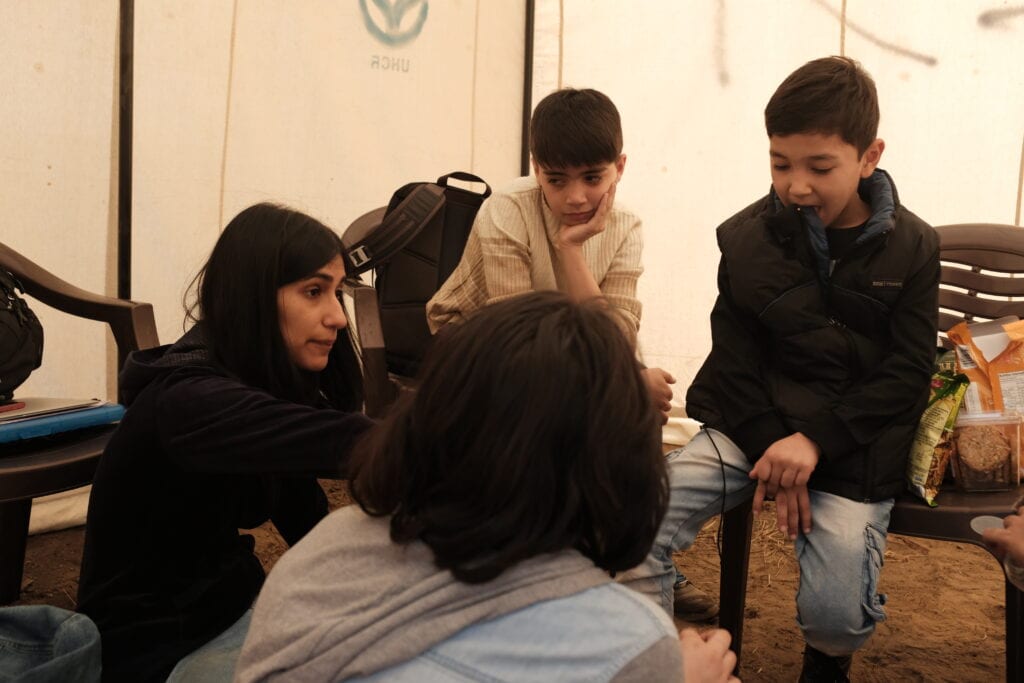
I was very fortunate that the organization R4R in Lesvos, Greece accepted my application to volunteer for them. Though I was there for a transient period of two weeks, it immensely helped the story, characters, and set design.
The people I met—mostly from Syria, Iraq, Sudan, and Afghanistan—were some of the most hospitable and optimistic people I have ever met. One of my tasks as a volunteer was to clean the camp and pick up the trash. With the scorching hot sun reducing my efficiency I’d often sit down to take a break. More than once some refugee would bring me their only bottle of cold water. I was bemused each time to witness the kindness they possessed. Another time, after I befriended a refugee at the camp, her family invited me for dinner to their tent and served more food on my plate than their own.
Desperate times usually bring out the worst in people, so I couldn’t fathom how it brought out the best in so many of the refugees. Basic amenities like soap, toilet paper, and even a toothbrush turned into luxuries for the refugees, and the overcrowded, resourceless camp had little to offer. My experience as a volunteer was a pivotal point as I changed the antagonist of the movie from the father, as I had previously written it, to the dire circumstances at the camp.
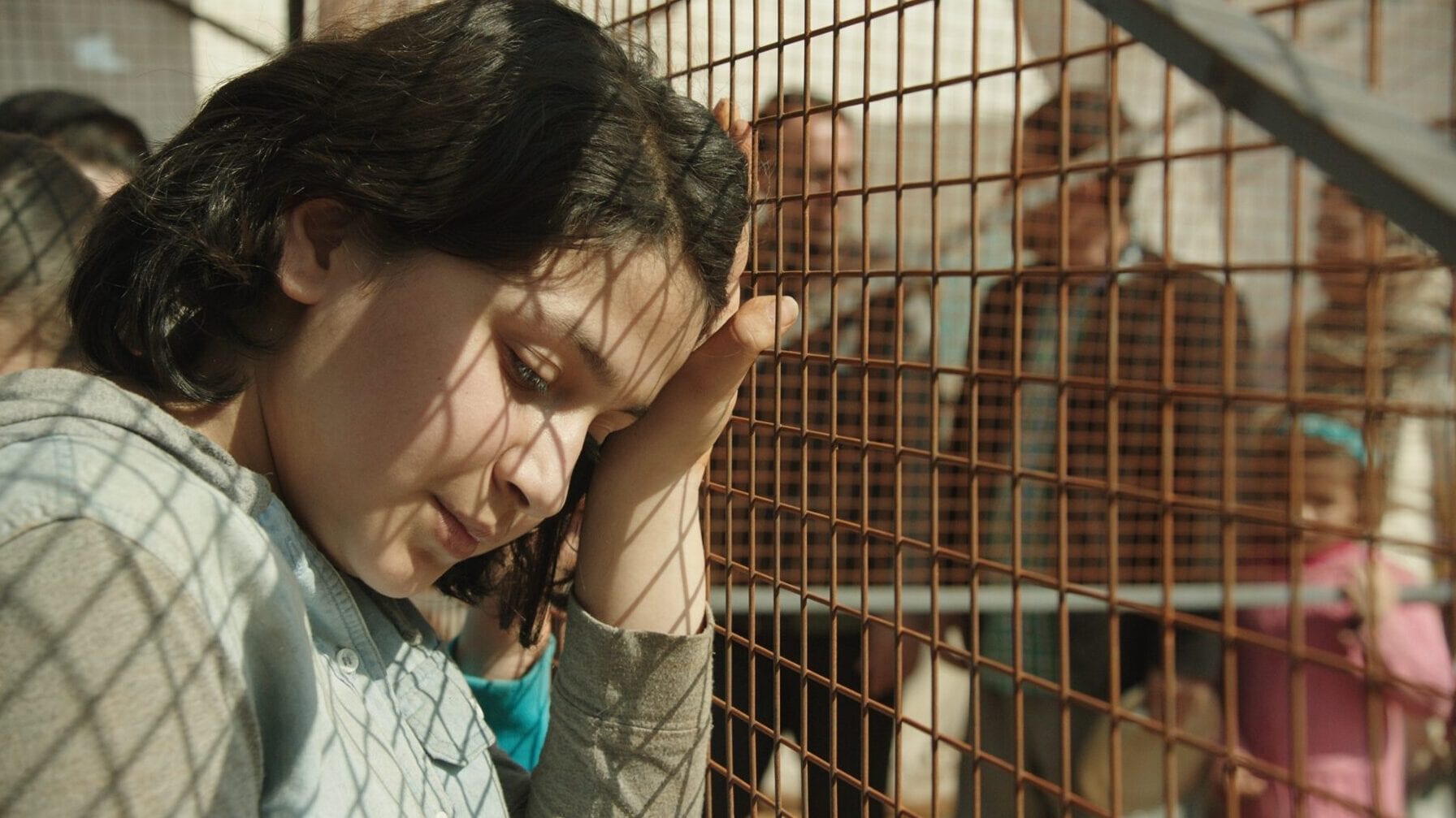
Your lead actor who plays Ghazaal is incredibly engaging to watch on screen, expressing a lot through subtle looks and movements. How did you find her for the role?
The casting director on this project got many Afghan children to audition for the movie, but somehow very few girls volunteered for the titular character. Ghazaal was amongst the first ones to audition and just a few minutes in, my gut told me to cast her. In her first round, she was very reserved. Part of it was my fault as I gave her some dialogues from the script, which in my opinion is the worst strategy when auditioning kids. In round two, I asked her to sell me a hairpin with as much conviction as she could. She mostly spoke in Dari and I replied in Hindi. Though I couldn’t fully comprehend the language, and hence her tactics, I saw how honest and natural she made the interaction seem to be. I auditioned a few girls after her, but I was already biased. My intuition strongly told me to cast her and I am very grateful that it worked out.
Many of the children, I understand, were not professionally trained actors. How did you work with them to achieve the natural and subtle performances we see on screen?
The kids were totally off book. They had a vague idea of what each scene would entail but did not rehearse beforehand. I wanted them to avoid preempting each other’s lines and since the movie isn’t dialogue heavy, they had the freedom to change things around as long as they stuck to the gist of the conversation. The improvisation on screen was nuanced by the rapport and candor they shared off set.
Working with such talented, fun, and a few naughty kids was the best part of the entire experience. Most of them spoke Dari and understood a few words in Hindi and English, so I would have to enact a few scenes for them when communication became hard. Thankfully, their re-enactment was way better than my original acting. One of my favorite moments during production was when a kid who was a background actor (he was fluent in Hindi) and not a part of the scene we were currently shooting walked up to me and said in the most innocuous tone, “I’m going to give you one last take and then I have to go and play in the other lawn.” He was absolutely unaware of where the camera was and didn’t realize that his scene had ended a while back, as he didn’t know what the word “cut” meant in film lingo.
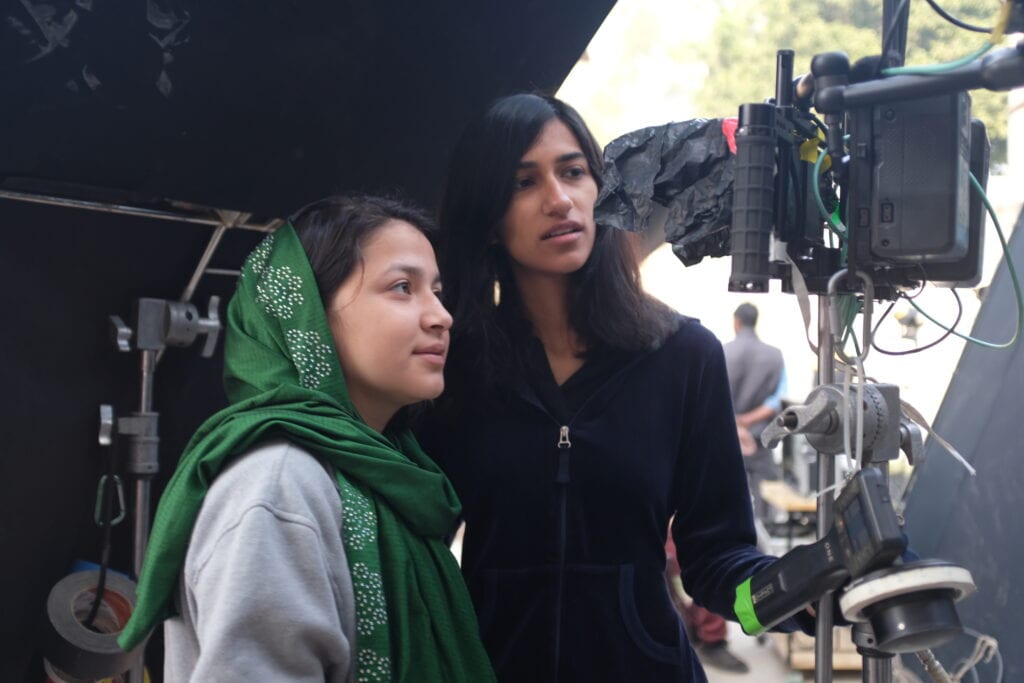
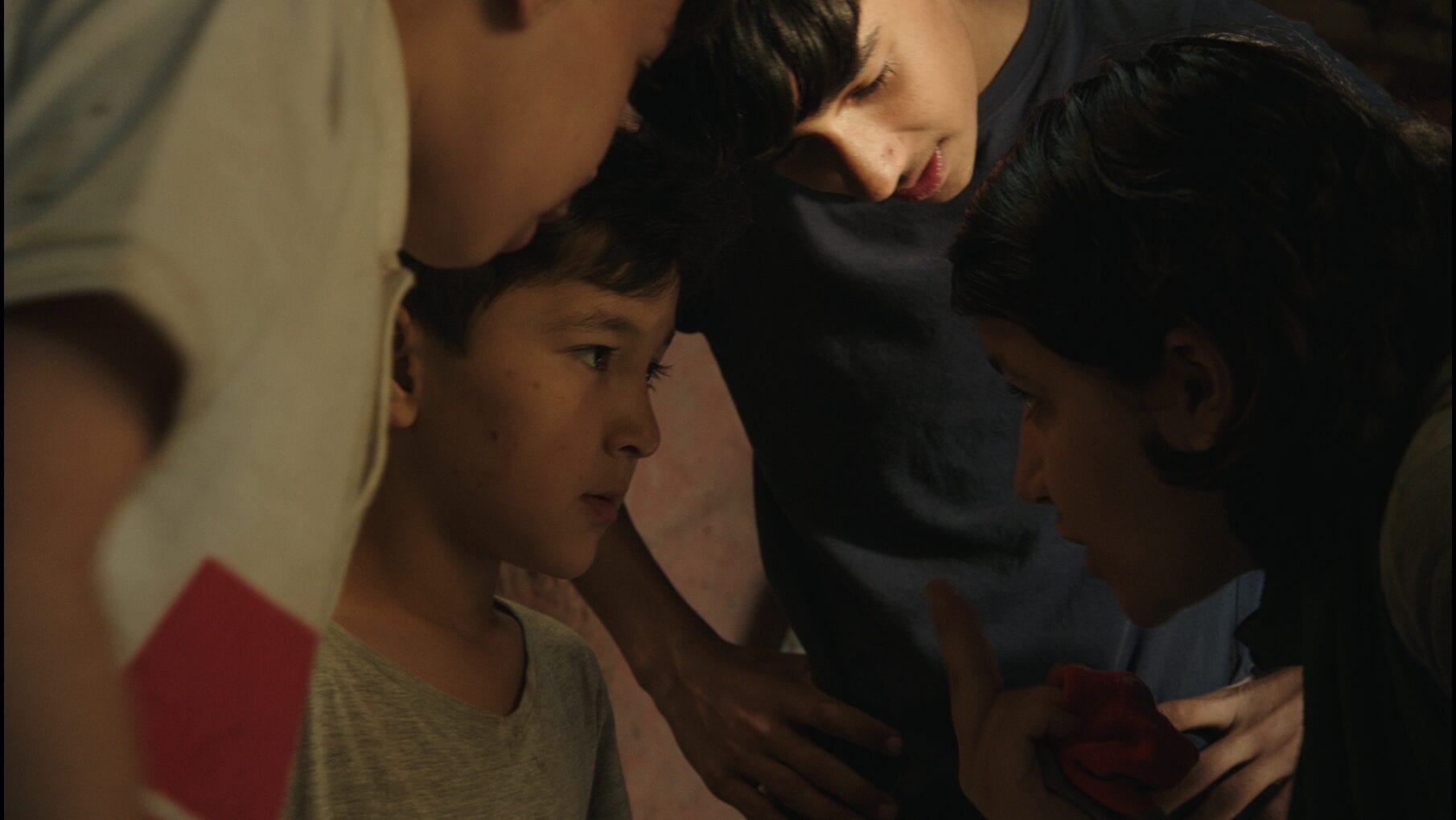
The scene with the children bartering for the single sock is humorous, simple, and very honest in its depiction. How did you approach working with the camera and actors in that scene to create such a genuine moment?
I seldom use the phrase “it felt like magic” when talking about any experience, but I won’t shy away from using it for this particular scene. Everything seemed to flow naturally and take shape to the best of its potential. The actors were enjoying enacting this make-believe scenario where I whispered to Ghazaal that she wouldn’t sell the second sock for a penny less, to the boys that they shouldn’t let the little kid make the trade, and to the kid that those socks are the only colorful ones he could find at the camp so he must get them at any cost. They had no clue what the other person would say beforehand, so the stage became their playground and they all simply wanted to win. The narrow beam of light entering the cave made the lighting moody yet playful enough for the scene, and the director of photography was intuitively capturing what felt organic to the conversation, which differed in every take. Honestly, when I look back I feel like I didn’t do anything. I was sitting by the monitor, making minor tweaks, and enjoying the “magic show” that felt tailor-made for me.
There are some explicit scenes dealing with the practicalities of menstruation, why was it important for you to include those visuals?
Periods are considered a taboo in almost every part of the world. Though it is such an unavoidable and innate part of a woman’s life, it is not often addressed in the media. However, growing up, I had a different perception of periods. Thanks to my education at an all-girls school in New Delhi, my friends and I were very open about our periods, and never even made a big deal out of staining. Flaunting huge red dots on our uniforms, we’d seek help from each other, and at times use it as an excuse to skip class. My bubble finally burst when I went to a co-ed college and realized that periods are supposed to be treated as hush-hush.
So, when I approached the topic of periods in my film, I consciously made the choice of showing the red, bloody stains, because to this day, it is not gross to me at all.
From the festivals you have attended what have been some audience responses?
I’ve gotten a lot of constructive feedback from all the festivals that I have attended, in person and virtually. Mostly everyone enjoyed the performances and the visuals. The disagreement amongst the viewers lied in how I chose to tell the story. Some thought it was too slow and lacked drama, while others felt the pacing suited their taste. Some felt uncomfortable with the graphic representation of periods. A number of women related to the moment when she places the boiling pot on her stomach to get some relief from the pain, and a number of men said that they were clueless about the amount of blood a woman’s body expels during her menstruation.
The most special remark was a similar note that I got from a college friend and another friend that I met at a film festival. They said that the film reflected my personality. I think there are a number of nuances in the film which do that, and I was flattered when a couple of people did pick it up. It felt like they dug deep into my soul to make that comparison.
Can you talk about any future projects you are working on?
Currently, I am working on a couple of shorts and my first feature film. Set in New Delhi, the feature revolves around 12-year-old delinquent boy Raghu, whose destitute mother gets him employed at the same affluent house where she is a domestic worker. Trouble begins when he starts avidly stealing from them to fulfil his younger siblings’ needs. The story is a result of my belief that it is unfair to expect the same level of morality from the underprivileged as we do from the rich. I am in pre-production at the moment and will hopefully go into production by late 2022. I am looking forward to working with non-actors again.
Learn more about Ghazaal on IMDB, or you watch the trailer here. You can find Ragini Bhasin on her website, Facebook, Instagram, and IMDB, and you can learn more about Jennifer Dean on her profile.