Marian Evans
And then I cared for my mother, who had breast cancer, in the last ten days of her life. We reconciled, and it was a loving time, but it was nevertheless a huge relief when she died. I was free of her ambivalence towards me and from her expectations. Whew.
For other reasons, I became heartbroken and ill. Part of the heartbreak came from a long period of representing women with post-traumatic stress disorder who were seeking compensation in the legal system.
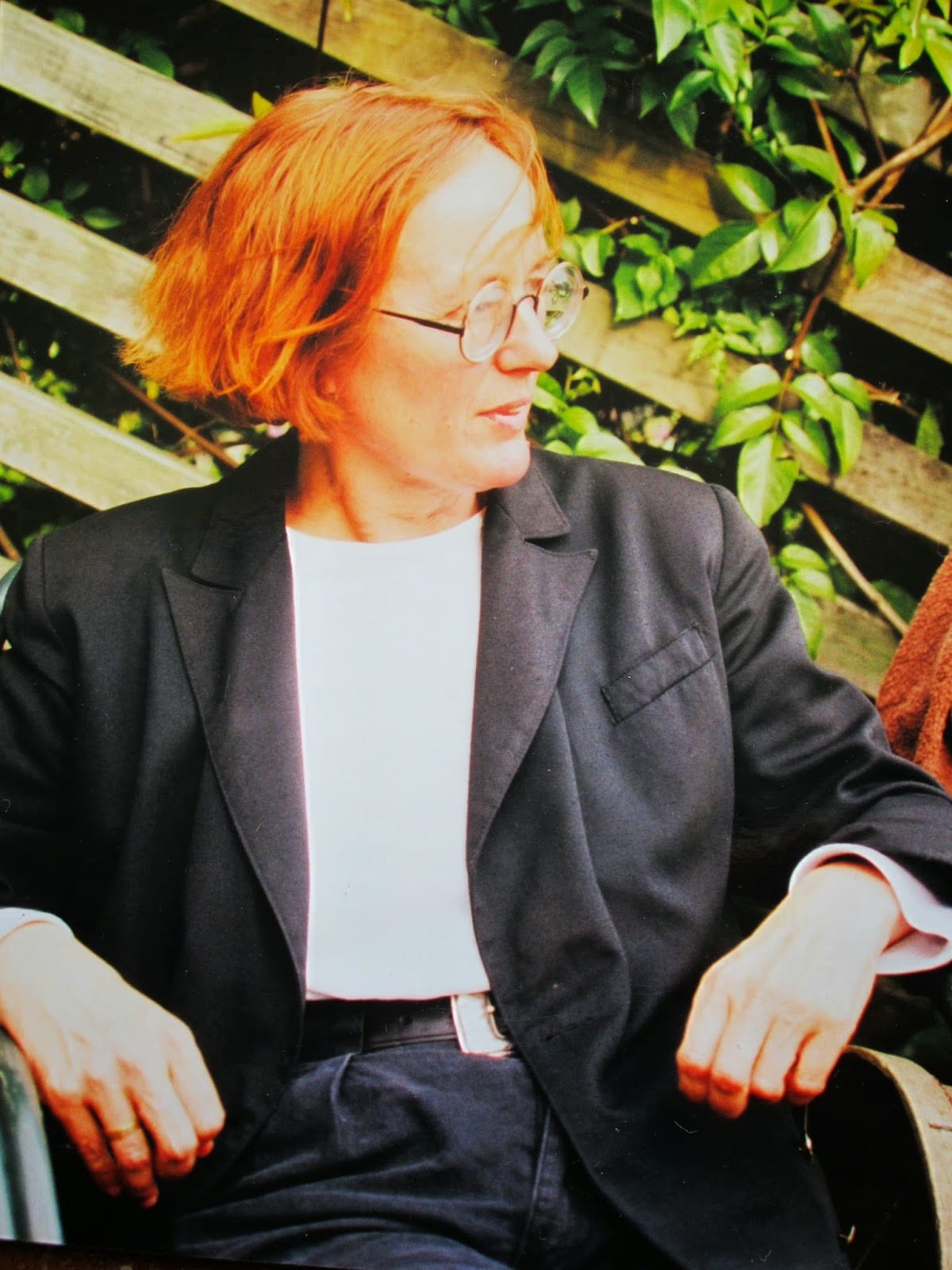
Marian outside her barrister’s office, worn out
I went to live in France, learned French among other outsiders, women refugees, while my youngest child went to school with their children. Went to Texas to help a French family whose son had been convicted of murder and who was being ripped off by their lawyers (and met the principals in a wonderful lesbian legal partnership, based in an old house, with a bath where they kept champagne on ice, astonishing to me). Came back to New Zealand. Yes, it’s a long story. But all these unrelated bits made sense when I was back here in Wellington about the time that digital cameras became accessible.
What did I learn during this “law” time? I spent a lot of time coming to terms with the residual pain from my childhood, as I learned that “the law” is inadequate at keeping women and children safe. I learned about the concept of “absent” motherhood and realized that I’d been an “absent mother,” as well as having had an absent mother myself. A therapist I loved attempted to “re-mother” me, which I both welcomed and resisted.
I also came to understand that I was happier in Europe than in New Zealand, but with two of my children and some security in New Zealand—my house and garden—it was better to return. I was often unwell, with the compromised immune system that troubles many people who’ve been abused. I continue to learn about caring for myself.
Step 5—Getting Free
Back in New Zealand and delighted that there were now relatively inexpensive video cameras that produced broadcast-quality footage, I wanted to explore how others “got free” of abuse experiences and built resilience. My old mate Juanita launched into a complex parallel audio project, and I filmed resilient, creative friends who’d been abused, two of whom were terminally ill. Getting Free took all that I had and more, some of it while I was also establishing courses in and teaching contextual studies and moving image at a local polytech.
Juanita and I learned that it was often very healing for participants to tell their stories to a careful listener, outside a formal therapeutic context. And we learned a lot about oral history. For me, one of the most important film-related lessons was about ethics. Usually, interviewers own the interviews they make. Interviewees release the interviews for publication on that basis, formally or informally, often without any payment for their stories. We decided that this practice privileges the interviewer too much. Instead of using established oral history and filmmaking protocols, with Bridie, the third co-founder of the Women’s Gallery, we started from the premise that everyone who tells their story owns that story, not the interviewer.
We then created protocols that required us to negotiate access to and use of every interview with each person we interviewed. As a result, some of the interviews have a long embargo period. Others require permission before access and use by anyone. Still others are open to all, but permission and possibly payment is required before use and publication, sometimes permission from the interviewer, sometimes from the interviewee. After viewing an initial edit, one of those filmed decided she wanted her filmmaker son to complete the work after her death. Another, Galvan Macnamara, didn’t want to see his feature-length film, Sister Galvan (2004), until its premiere at Mahi Ata: Mahi Ahua Women’s Work in Film, a New Zealand women’s film festival and associated website a friend and I curated. Galvan died a short time later. I still find it hard to watch even a short clip from the film.
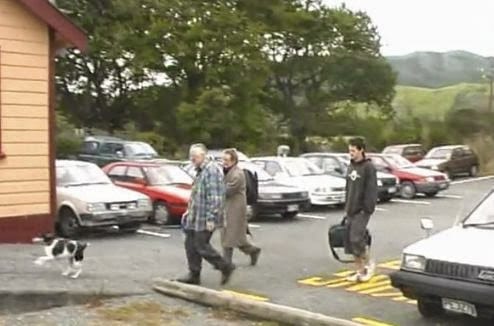
Moving towards death: On the road with Galvan, his dog Oskar-Ra & my youngest son Penn
All the material that Getting Free generated rests in the Alexander Turnbull Library, including a final interview Bridie did with Juanita when Juanita was dying.
Flowers for Juanita Ketchel
We learned from Getting Free that the strategies for funding books and art projects could work for film. Not surprisingly in view of my history, our camera and office were funded by organizations who supported our extended work with one interviewee. The completion of Sister Galvan, the only completed film, was funded by institutional and individual allies who cared about Galvan. We also learned that negotiating the documentation of real people’s lives with love and care, meeting their needs as well as ours, was exhausting. I wrote 7 Risks for Single Mothers & The Art of Managing Them based on what I’d learned as a single mother, as a lawyer, and from those we’d interviewed, and decided to turn to fiction. A massive turning point.
Step 6—Scriptwriting
I applied twice to enter New Zealand’s only MA course in scriptwriting, at the International Institute of Modern Letters. Made it the second time and had a wonderful time in a class which was half women, half men, as it is there consistently. Won the class prize. After graduation, took part in a fabulous masterclass with Linda Voorhees from UCLA. And then noticed that although half the students were women, and women won the class prize as often as men, and although New Zealand is known internationally for its women directors (Jane Campion, Niki Caro, Christine Jeffs), and Fran Walsh and Philippa Boyens write for and with Peter Jackson, a tiny proportion of feature films are developed and made by women writers and directors.
I started to ask questions. Met a wall of silence. People—especially women in film—turned away. They were scared to speak out. Without my experience from way back—with Kidsarus 2, at the Women’s Gallery, with Spiral, the experiences of counting, of having faith in audiences and funders for diverse story-telling, of expecting the unexpected when searching for allies—I might have retreated into another activity. Instead, I decided to do a Ph.D. about women in New Zealand’s feature film development process and as part of that to try various ways to write and make features myself. I got a scholarship and started work, first at the Management School and then at the International Institute of Modern Letters, where I was the institute’s first Ph.D. graduate.
This Conversation is Over. photo: Marian Evans
Only one director, a woman of deep talent, told me her story in a formal interview. It was heartbreaking to realize that she was a contemporary of men who had by then made several features. After that, I did some formal preliminary counting at the state funder, the New Zealand Film Commission, with the blessing of the CEO, who had helped us get Kidsarus 2 funding when she worked at another state funder for the arts. She’d thought there was no gender problem in New Zealand film, but when I showed her my results she acknowledged that she was mistaken. And then left for another position. The next CEO didn’t care about gender at all. The fear among women directors continued. The silence continued. I kept writing.
I learned that when a small country has a small pie of feature film funding to share, no one wants to rock the boat and affect their own opportunities because they’re seen as a whinger.
Step 7—The Development Project
My Ph.D., Development, was grounded in autoethnography, the study of self in culture. If no directors wanted to speak, I would myself experience and speak; I’d study myself as a researcher, an activist, and as a scriptwriter practitioner. Alongside the data collection, I experimented with writing three feature scripts—a low-budget one to be crowdfunded, one that Cushla Parekowhai and I co-wrote, and a third that I hoped would be an Australian co-production. Seven years later I still like the ideas for the scripts and for their production. One script was filled with women, but the other two were about boys. Did I know subconsciously that having male protagonists would give me more funding opportunities? Cushla and I did discuss having a girl at the center of our story but in a truly dangerous Harriet-The-Spy-type role we settled on a boy. And as in every fiction I’ve written before or since, an absent mother or two crept into the stories.
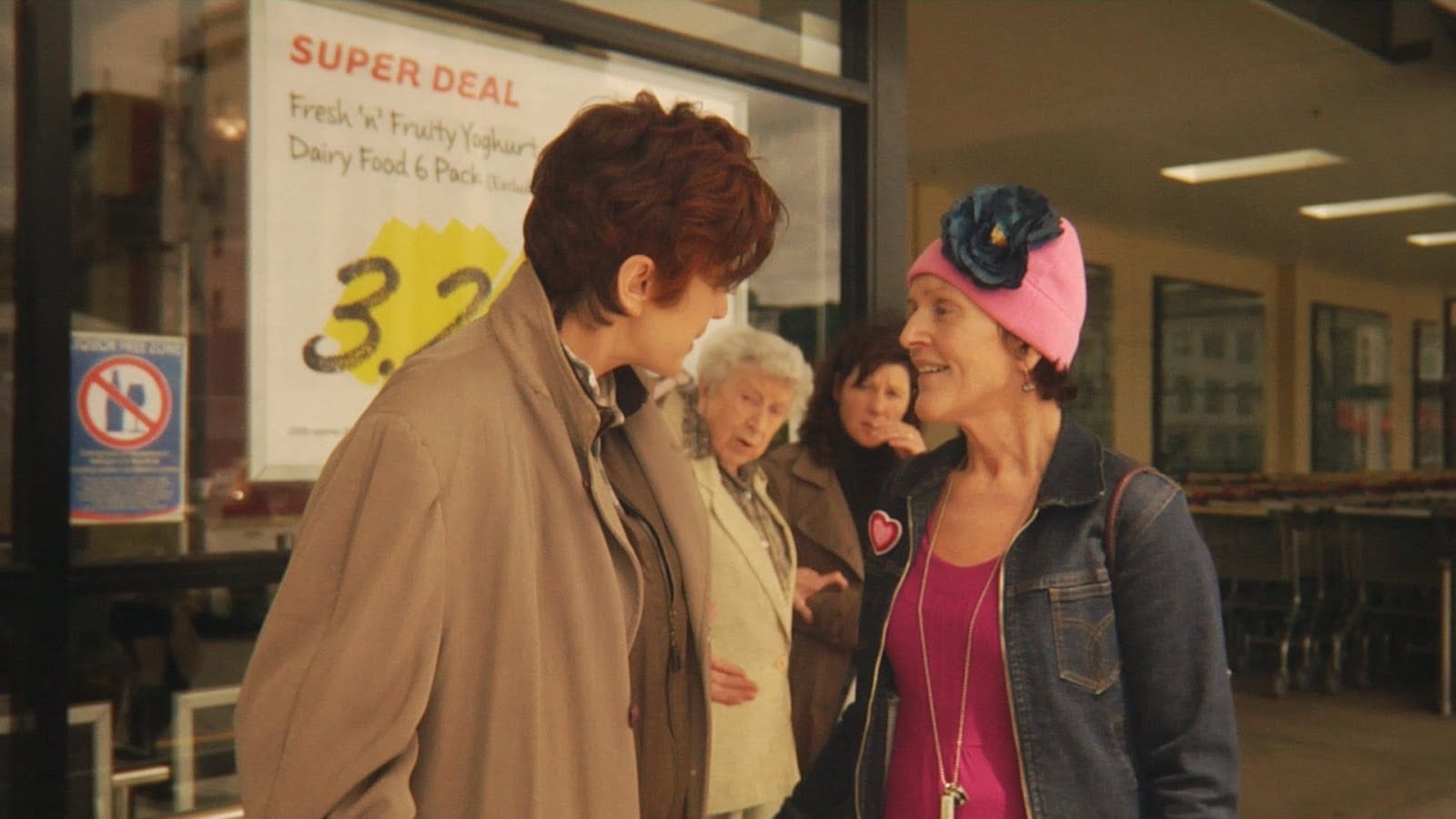
Screenshot from Development-the-movie, with actors left to right at front, Madeline McNamara, Pinky Agnew, at back, Nancy Coory, Michele Amas
The women’s script, Development-the-movie, got to production, with assistance from individuals, institutions, and a supermarket chain in one of whose stores some of the film was set. Its budget was based on the “Sally Potter” principle from her The Gold Diggers, a principle I’ve worked with ever since. Apart from some generous people who helped with catering, everyone was paid, and everyone was paid the same daily rate. Then Nancy, the “ancient” (her own description) feminist star who had inspired the film, aged 94, could not go on. And I realized that I had under-budgeted because we couldn’t do the six pages a day I was used to from working on fast turnaround children’s television. After a difficult period of loss and grieving, I abandoned the project.
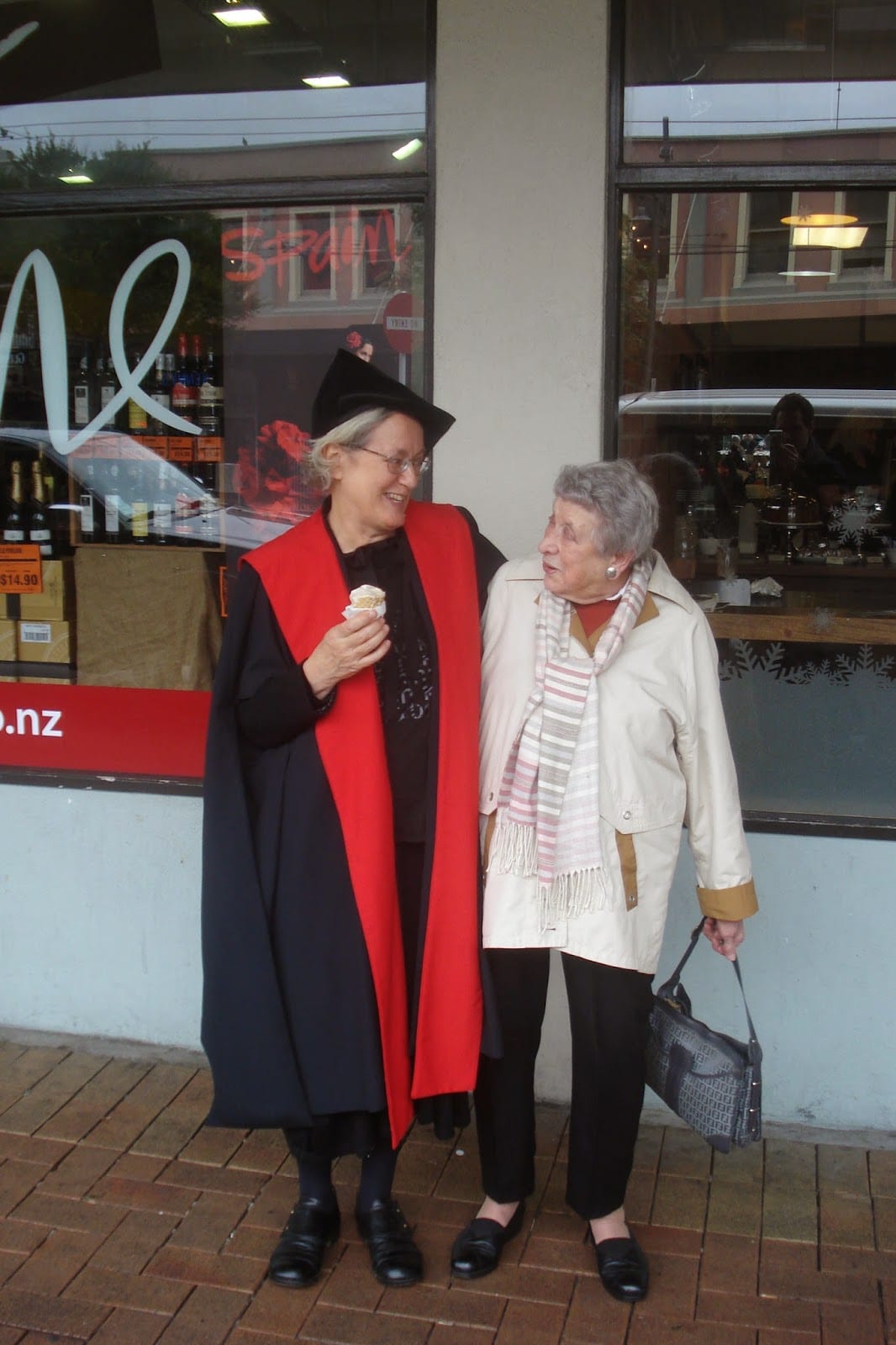
With Nancy on graduation day
Lost Boy, the Australian story, foundered on unexpected ethical and legal grounds, so I transformed it into Hemingway’s, an experimental, still unfinished online novella. Cushla and I also abandoned our script after some mentoring from Linda Voorhees because we couldn’t agree on which elements to retain from what Linda called “an embarrassment of riches.” Cushla now has the script, and I believe she’ll do something wonderful with it.
Towards the end of writing up my Ph.D., the internet kept me going, especially Twitter. Here at the end of the world, I was sad and often lonely with few people-in-real-life available to discuss the activist/researcher/practitioner combination of my over-ambitious project. My blog, Wellywood Woman, “for women who make movies & for the people who love them” has always had a readership that is 95% outside Australasia. And once the thesis was complete, I continued to look outward and to discuss and explore what was happening with women’s filmmaking in other parts of the world with lovely individuals and with communities like agnès films.
I also became fascinated by media convergence. What does it mean for women? If, with access to “pause” and “rewind,” we can now “read” films online as though we’re turning the pages of a book, if we can film on our iPads and distribute films ourselves online, if we take some lessons from branded entertainment like the Miu Miu Women’s Tales series, if we learn from the National Theatre’s films of their productions, can we increase the volume of what we make, revolutionize our public storytelling on film, and find new audiences and each other?
Last year, I wrote a stage play, Throat of These Hours, about renowned American poet Muriel Rukeyser (1913-1980) and two women working in a contemporary radio station. Then I adapted it for radio. It’s an experiment, to write directly about a (cultural grand) mother and what we can learn from her today. Along with Hemingway’s, and learning to make comics (that relationship between text and image again), Throat of These Hours has helped me to experiment with what’s possible, following Ava DuVernay’s advice below and to give a new attention to sound, for radio (such fun and so cheap to use!) and in work with Christine White, the composer who is setting some of Muriel’s poems to music for the plays.
And, perhaps more importantly, becoming “familiar” with Muriel (whose son is almost the same age as I am) has at last given me a secure place to stand, as a “daughter” of a woman who, I believe, knew that women who create need cultural mothers and grandmothers. Like Virginia Woolf and Tillie Olsen and Joanna Russ, she spoke to the women who follow her. Although renowned as a poet, Muriel also had a “calling…to do and be many things,” and to move across media, as a filmmaker, a writer of biography, a writer of hybrid novel/memoirs. And she was a powerful feminist. For me, Christine White’s setting of this poem Muriel wrote not long before she died is a kind of prayer, and a prayer answered. It sustains me, towards the end of my journey.
Interrogating Tinkerbell, a short film about anxiety made during a 48 Hours film competition and in response to one of Hinemoana Baker’s poems, was part of the Throat of These Hours research and is quietly traveling to festivals. In Jade, an educational resource to teach children to keep themselves safe, I got to write an animation to someone else’s brief. In a short doco about Bruce Cunningham, a local pilot who survived The War, I hope to work more with an animator.
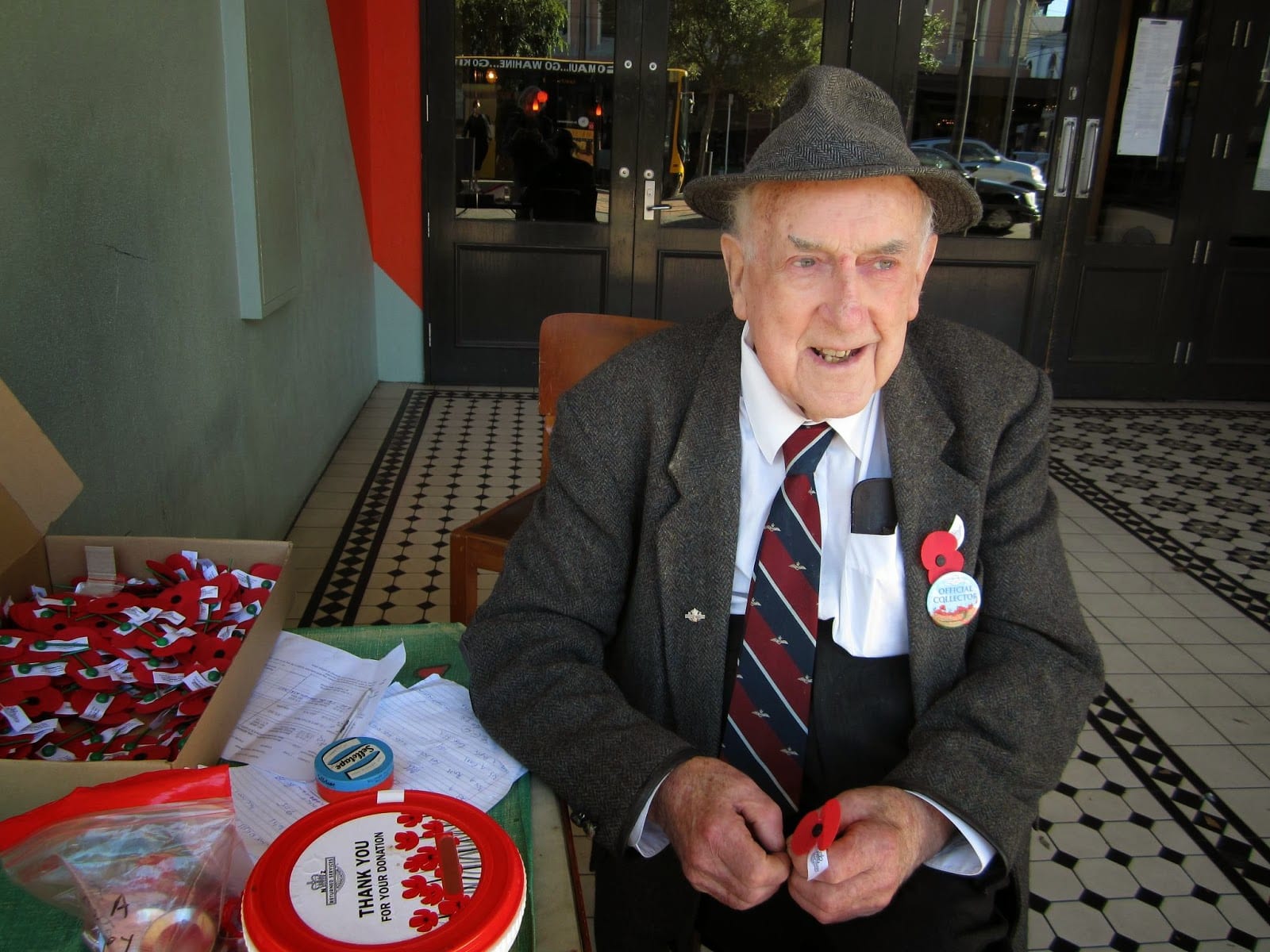
Bruce Cunningham selling poppies
Mine is a small, patchwork practice, but it’s rewarding. This year, I’ve been almost entirely engaged with writing non-fiction. Because the New Zealand Film Commission is now taking responsibility for recording gender statistics and Jane Campion has taken responsibility for gender equity in film in New Zealand (miracles!), my political work here feels almost done, though I’ll continue to keep an eye out.
Next year, back to film and fiction. I’m in control of my own destiny at last. And it feels very, very good.
To learn more about Marian’s diverse work, visit her website.
To visit Marian’s profile, click here.
Ava DuVernay