Interview with Jennifer Zahlit and Larkin Bell, Hosts of the Podcast A Female Lens
Interview by Mimi Anagli
Copy Edited and Posted by Jessica Gibbons
As filmmakers and people who are deeply immersed in the world of storytelling, did you always want a career in film? Did anything influence your decision to pursue that path?
Jennifer: I came to film through theatre. Larkin and I actually met each other in theatre school while studying acting. I pursued acting after graduation, eventually moving to NYC. After noticing that I approached every audition and every play I viewed with a big picture mentality, I realized that I was a director and started directing theatre (and loved leading the collaborative process, rather than just being a part of it). I then followed the impulse to explore directing film, and after shooting my first short last year, I was completely exhilarated by the process and wanted to do more. I moved back to Los Angeles six months later to pursue film more intensely.
Larkin: I have always loved storytelling and art in its various forms, and I found my love of performing first through dance and then through theatre. I also grew up attending the Sundance Film Festival every year, which played a big part in my love for film and curiosity about filmmaking. To me, filmmaking feels like a natural combination of all the art forms I have explored, and it is a great avenue to continue exploring them more deeply.

Jennifer and Larkin at Sundance 2019.
You have a podcast that cultivates thoughtful discussions on women’s experience in the film industry. Is there anything specific that compelled you to start a podcast, out of all other mediums, to spark this discussion?
Jennifer: We had the idea while taking a road trip. We had just finished shooting our first twenty minute short and were trying to learn anything we could about filmmaking. One of our favorite resources is podcasts, and we realized that not many were hosted by or interviewed women. We wanted to change that!
Larkin: Yeah, we truly spend our time together having conversations about filmmaking and storytelling and supporting women, and we love podcasts, so we just thought—what if we make a podcast about all those things? We are huge fans of Ann Friedman and Aminatou Sow’s podcast Call Your Girlfriend, and especially love their Shine Theory which states “I don’t shine if you don’t shine,” which is an underlying value of our podcast. We want the women we interview to shine, so we can all shine and rise up together.
If you could describe your podcast with three words, what words would you choose and why?
Jennifer: Thought-provoking: Every interview gives me something to think about. These women challenge me to be a better collaborator and filmmaker. “Enthusiastically ambitious:” This was our motto when we first started the podcast. We recognized that we had big ambitions and were also very enthusiastic about going after them. We wanted to have a phrase that reminded us of our core philosophy starting the podcast and to have that guide each choice.
Larkin: Inspirational: after each interview, I am always left with such a sense of amazement from the woman we’ve talked with. Motivational: hearing stories about just how hard these women have worked to get to where they are constantly encourages me to work harder myself. Educational: we created this podcast so we could learn from other women, and I have learned so much about different facets of the industry that I’m not otherwise privy to. It is humbling and enlightening to sit down and ask these women about their experiences.
In your podcast, you highlight women in the film industry who are actively trying to change gender inequality and make breakthroughs in the industry. What is the selection process like for choosing these women?
Jennifer: It’s a mixture of us reaching out to people and publicists reaching out to us. For example, our first guest Elizabeth Chomko was kind enough to reply to our email and agreed to sit down with us. We were so excited because she had blown us away with her film What They Had at Sundance 2018, so that was a real dream.
Larkin: We started out by interviewing a few women we felt were reachable in our personal circles (all right, Elizabeth Chomko was not in our personal circles, but we did feel a very personal connection to her film and the way she spoke about it at Sundance). As we did more research and became more deeply in tune with the daily happenings in the industry, we started attending events where we met inspiring women, and one interview often led to the next (or the next idea for an interview).
Who is your inspiration when it comes to being a woman in the film industry and wanting to make a change?
Larkin: Well, I know Jennifer is going to say Ava (#queen), so I’m going with Geena Davis. She is an actress whose work I grew up admiring, and her Geena Davis Institute on Gender in Media is such a wonderful research-based resource and example of how we can all continue to work to make a difference in this industry. #seeitbeit
Jennifer: Ava Duvernay. She really practices what she preaches and all of her actions align with her words. Through her own ambitious and collaborative collective Array and her TV show Queen Sugar (in which every episode is directed by a woman), she truly commits not only to her own high quality of work, but brings along other underrepresented artists with her. She is a true collaborator. It’s unbelievably inspiring, and I personally aspire to be like her.
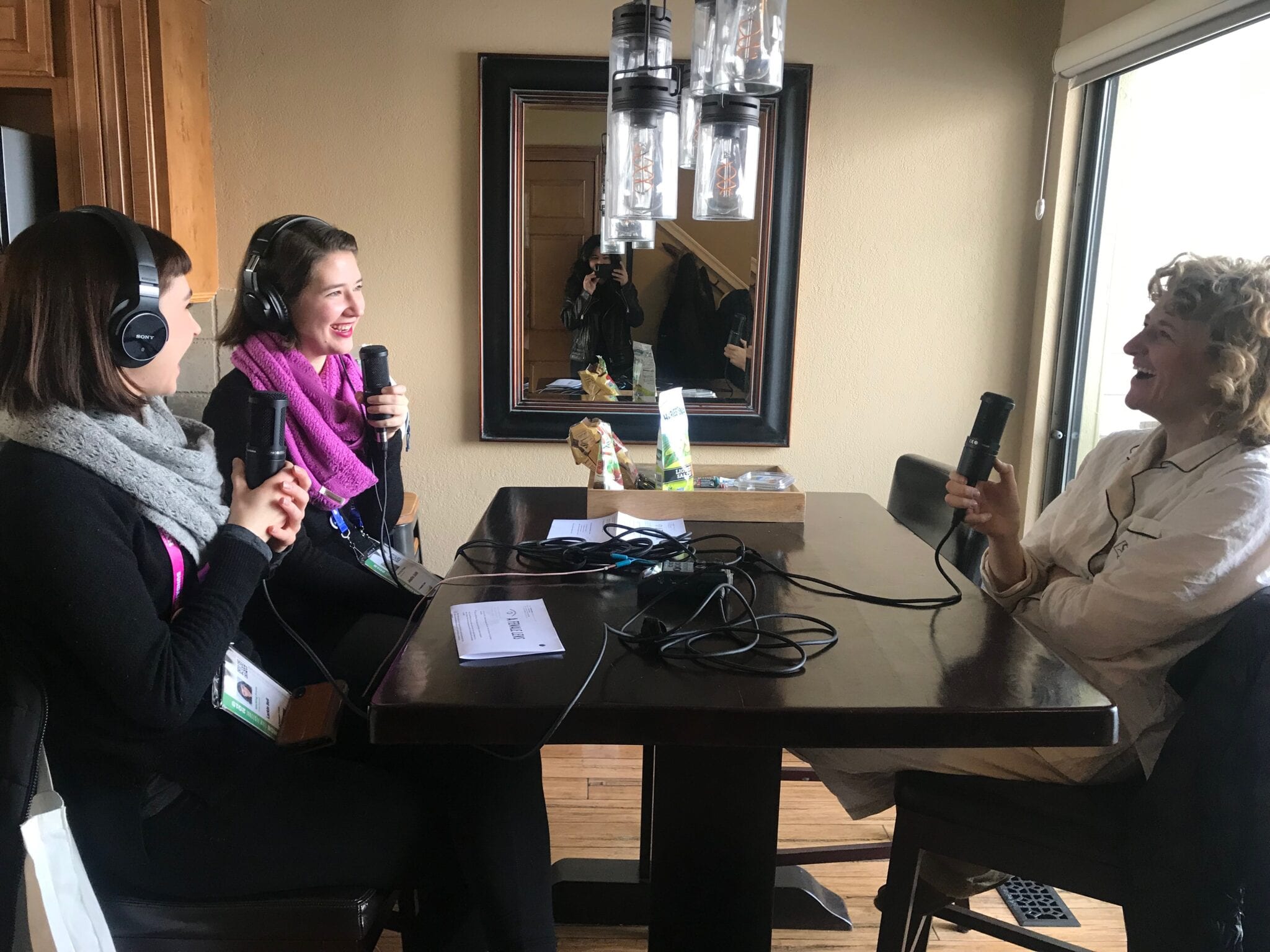
Jennifer and Larkin interviewing Amber Sealey at Sundance 2019.
What is your perspective on Hollywood’s growth, do you feel progress has been made? In what ways do you think the industry has made an effort in creating an equal and safe work environment? In what ways has it not?
Jennifer: I’m an eternal optimist, so I tend to see the progress. However, as we learned in Alicia Malone’s interview, women were the first directors until filmmaking became primarily a business. Money was not the primary goal, and theatre-owners were aware that women were a prime demographic for the movies that they were putting out. In those early days of Hollywood, women were involved in virtually all of the aspects of filmmaking. It’s difficult to track progress when thinking of that! But I think overall, there’s more of an awareness of what’s happening to women in film. Check out our episode with Amy Adrion who chats with us about her documentary Half the Picture, in which she examines the disappointingly low number of female directors and the EEOC investigation surrounding discriminatory hiring processes in Hollywood. We’re now at the crossroads of what we do at this moment. There’s a while to go until we reach full equality and safety, and that’s largely due to the power dynamics that have been in play for decades.
Larkin: To add to what Jennifer said, during our first season, I found that progress seems to be made most tangibly on an individual level; through individuals who choose to enact inclusion riders in their contracts, individuals who choose to give a woman an opportunity to direct a film, individuals who provide financing to women. I think this year especially, the conversation around women in film has grown and is supported by facts and statistics from research like Dr. Stacy Smith’s Annenberg Inclusion Initiative. Change starts with conversation and awareness, so, yes, I do believe we have made progress. However, conversation and awareness is just the starting point, and there is still a very long way to go before we achieve equality in this industry.
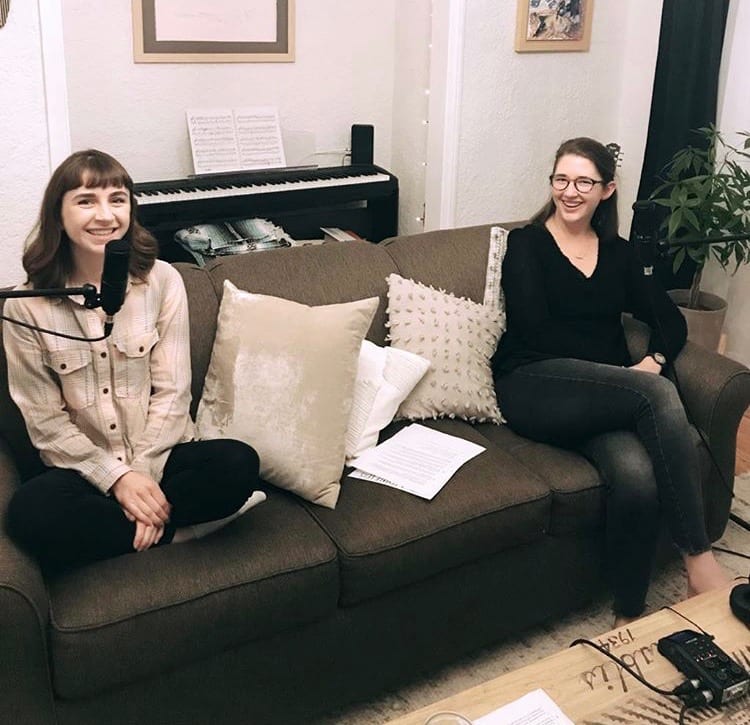
A Female Lens‘ first interview.
What advice do you have for women aspiring to be filmmakers? What is something you wish someone told you when you took your first steps into the industry?
Jennifer: If you have something to say and the discipline to execute it, go for it! I do think it is important to be intentional with your filmmaking. It is important to be really solid in your own artistic sensibility while maintaining an openness in order to fully collaborate.
Larkin: Building on what Jennifer said—as far as collaboration goes, find the people you work well with and want to create with. Hold on to people who have a similar sensibility for the type of art you want to make and for the stories you are interested in telling. Then, lift those people up and support them in their endeavors as they support you in yours. Collaboration is a balancing act of generosity, trust, and asking for help. If you want to be a filmmaker, the most important thing you need to learn is how to collaborate. Making a film is an entirely collaborative experience (and it’s awesome)!
Personally, I really enjoyed the first season of A Female Lens and am looking forward to the second season. Is there any exciting news you can give about the upcoming season?
Jennifer: Thank you! We’re looking forward to interviewing more women with lesser known jobs within the industry, such as production designers, festival programmers, costume designers, and more.
Larkin: We are so happy to hear you enjoyed the first season! We enjoyed it too. We learned so much, and we have started brainstorming a powerhouse list of women we are interested in speaking with. Our list is pretty expansive at the moment (and keeps growing) but it’s inspiring and just goes to show that there truly is no lack of women in this industry, and there is definitely no lack of incredible women dedicated to excellence. We can’t wait to share the next season with you! Stay tuned.
If you would like to learn more about the podcast or listen to A Female Lens, visit their website. You can also find more information on their profile. You can learn more about Mimi by checking out her profile.