Interview with Amy Taylor, Writer/Director of Hunter’s Weekend
Interview by Denise Papas Meechan
Copy Edited and Posted by Jennifer Bell
Your feature debut, Hunter’s Weekend, hilariously dissects toxic masculinity. What made you take on this topic, and why did you choose to explore it in comedic form?
I find toxic masculinity fascinating, horrifying, and ultimately so absurd that the only way I can stomach exploring it is through comedy. I think there’s always a danger of glamorizing anything that you put on film just due to the fact that typically it’s up there on the big screen with gorgeous, talented actors, cool cinematography, etc., and I didn’t want to do that, so I tried to hone in on the patheticness that’s really at the core of toxic masculinity. These serial killers are not broody and mysterious. They’re idiots who are so desperate for recognition, validation, and approval that it’s hilarious and also sad.

What experiences with toxic masculinity have you had, and what is your advice to combat it?
Luckily, I don’t have too much in person experience. Or rather, now that I think about it, not much experience with extremely aggressive toxic masculinity. Looking back on my experience growing up, there was a gentler, more passive form that, nevertheless, permeated my world: boys do this and girls do that—boys play football at recess and girls…I don’t know, giggle? Grown-ups, including teachers, were always trying to make me conform to that dichotomy, but, and I think this set the template for the way I have dealt with toxic masculinity as an adult, I ignored them and did what I wanted. As an adult, when I meet people with these toxic ideas, I politely nod and smile, but make a mental note not to work with them. Which is an incredible privilege to be able to choose because sometimes you just need to make rent! But so far I’ve been able to cobble together enough work that I haven’t had to go back and work with anyone I found to be toxic. Which is not so much combat as avoidance. But I’m not good at in-person conflict, and life’s too short.
Filming as a mockumentary was very clever, as the genre often allows a smaller budget. What other benefits did working in this genre provide?
We could shoot very swiftly. We were filming anywhere between 12-20 pages per day and finished the entire shoot in 5 ½ days. Direct addresses to camera are super easy to set up and you can just knock them out quickly. The direct addresses also allowed us to put out a lot of exposition (hopefully in a humorous way!) that may have otherwise required much more complicated setups to accomplish.
Mockumentary is also great for the tone we were shooting for—highlighting the absurd and pathetic. There’s a really interesting tension that comes with the idea that these characters know they are being filmed, and so are performing for the camera, and yet, the camera can find moments where the characters can’t keep track of the facade and you see who they truly are. Which can be both hilarious and sad.
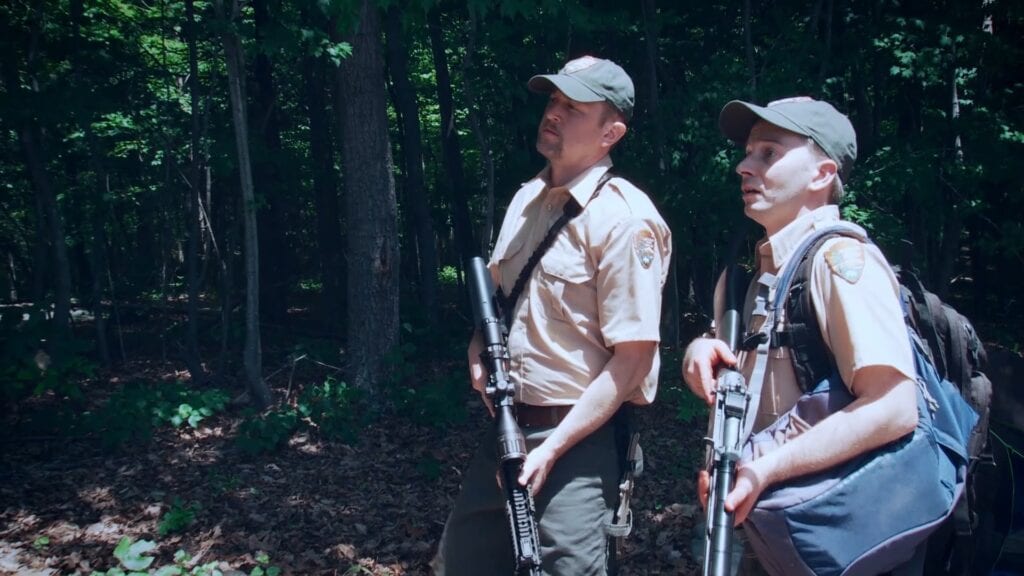
You were able to cast some very capable and talented actors. What attracted them to your script?
I had worked with these actors before—we attended Ohio University in either the Film or Theater departments—and so when I asked, they were all in to work together again. I warned them not to say yes until they read the script, but once they did, I think they were attracted to the humor and the idea of just getting out there and creating something. No waiting for permission or financing.
What excited me about Hunter’s Weekend is that your crew was made up of a majority of women. Was that your goal from the beginning?
It wasn’t hard because we were such a super small crew, so I don’t want to take too much credit, but having a crew with at least a 50/50 split is always a goal on any of my projects. Moving forward, I’d also like to have more people of color behind the scenes as well, because we were definitely a very white production. The more diversity in voices you have behind the camera, the more perspectives you have to draw from, which I think can only help create authenticity for your characters. For example, a lot of times I’ll watch a film that may have a female protagonist, or even a variety of female characters, but I can just tell that it’s written by a man. And a lot of times it may just be some small detail, but you just know that if there had been a woman involved creatively, that detail would be different. I think about the final fight scene in Birds of Prey where Harley Quinn gives Black Canary a hair tie in the middle of battle, and I don’t think we would have gotten that moment if it was directed by a man.
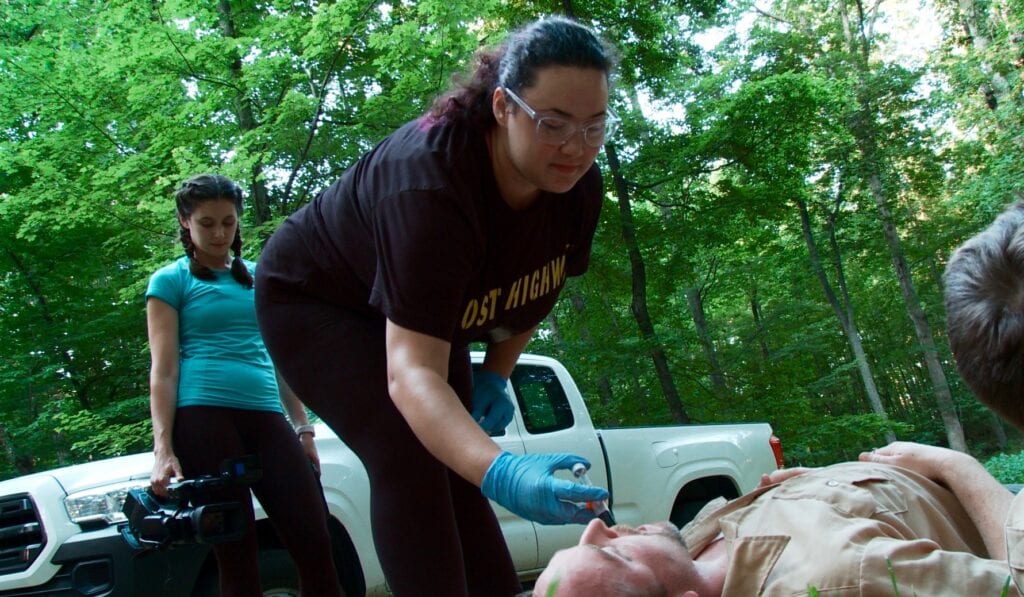
Although this is your first feature film, can you give perspective on the difference between your women-dominated crew and similar narratives with male-dominated teams?
I haven’t worked on a male-dominated team where the project was similar, but in general I find crews where there is at least a 50/50 split to be much calmer. Completely anecdotal, of course, but I always think male-dominated crews have a weird vibe of competitive tension. When there is more parity it feels like everyone can just be a person. Of course, some of the weird vibes come from the fact that in many cases it’s a bunch of strangers thrown together for this one job—one reason I try to work with people I know and have worked with before.
In terms of similar narratives, I think you can usually tell when it’s been mostly created by men even if there is a major female character. It’s like a guy’s idealized view of what a cool female character would be. I find that when women are behind the creative team, the female characters are allowed to be weirder, darker, and even that dreaded word: unlikeable. A movie I often think of in relation to this is Sucker Punch, which to me is female empowerment by and for the male gaze. The protagonist is ostensibly finding empowerment through escaping from her abusive situation by going into her imagination and fighting fantasy monsters which also translate into various obstacles in the real world—that’s simplifying it, but hopefully that conveys the main idea—but while she is finding inner strength, she’s doing it dressed in tiny skirts and heels. And that’s just the tip of the iceberg, because short skirts and heels aren’t inherently a bad thing, but the way the female characters are fetishized makes it clear the costuming is just part of a larger issue. Not to get side-tracked on a rant about Sucker Punch!
Hunter’s Weekend was made with money from a Kickstarter campaign. What went into making that campaign successful? Can you give any advice for aspiring filmmakers trying to do the same thing?
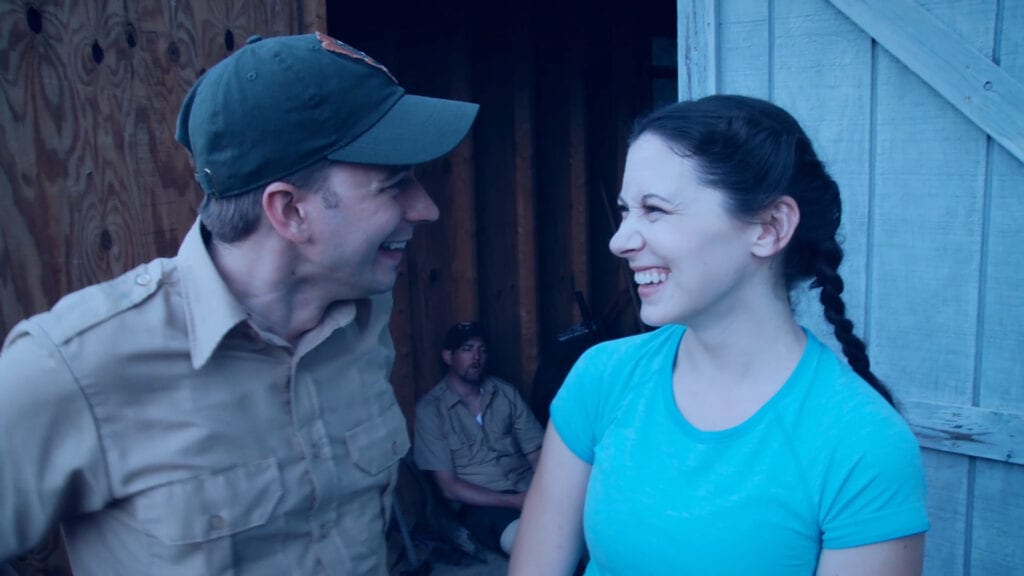
I think any crowdfunding success is ultimately based on what you do months before the campaign goes live. You need to start building your audience as soon as possible—social media, newsletters, anything you can think of to spark people’s interest and get them invested in the project. This will sound very calculated, but you also need to have a good idea of which of your friends and family will contribute and how much this is likely to be. Most of your contributions will come from people you already know.
I would highly recommend looking at doing your campaign with Seed & Spark, as they give a lot of support and advice to their filmmakers. Ultimately, I ended up doing Kickstarter because that was what I knew (I had done a campaign for my web series, Jess Archer Versus, a few years before), but if I had to do it again, I would absolutely take advantage of what Seed & Spark has to offer.
What projects can we look forward to from you in the future?
Currently developing a project with a very awesome production company, and if it does happen, it will be my first project with an actual real budget! I won’t have to crowdfund! (Knocking on wood, so I don’t jinx it.) Unfortunately, I can’t be too specific about it yet, but it’s definitely another horror/comedy, emphasis on the comedy. If Rosemary’s Baby was a comedy.
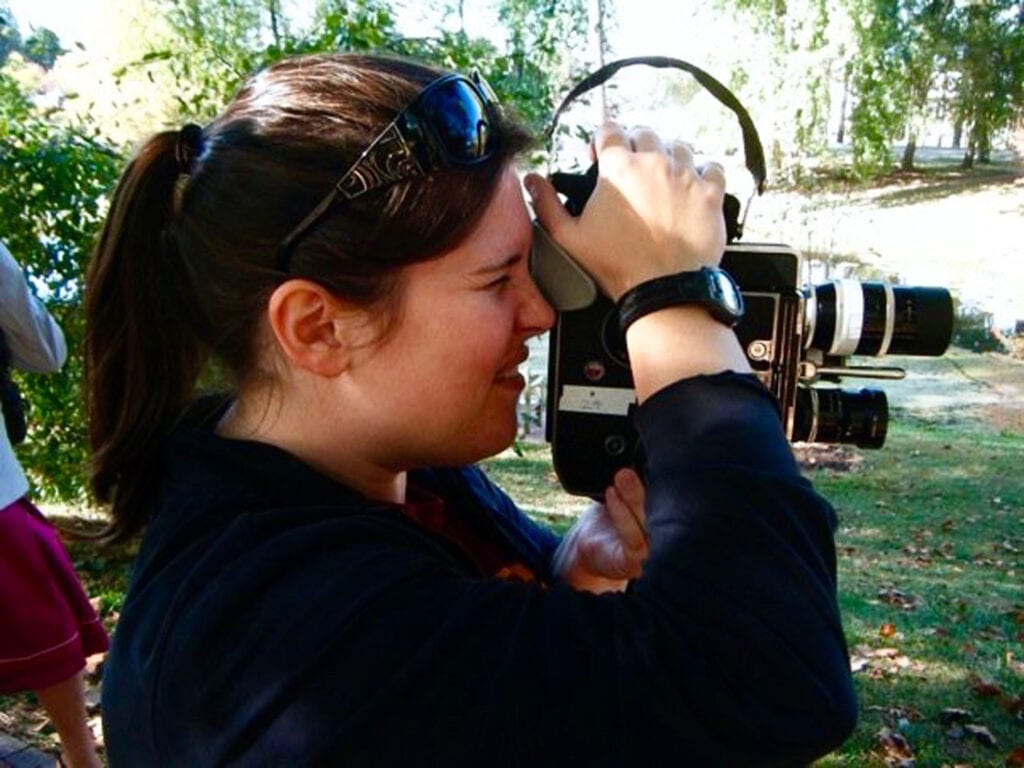
You can watch Hunter’s Weekend on Amazon Prime and learn more about the film on its website, Facebook, Twitter, or Instagram. To learn more about Amy Taylor, you can visit her website, Twitter, or Instagram.
Learn more about Denise on her profile.